
Civil, nautical and astronomical twilight, explained
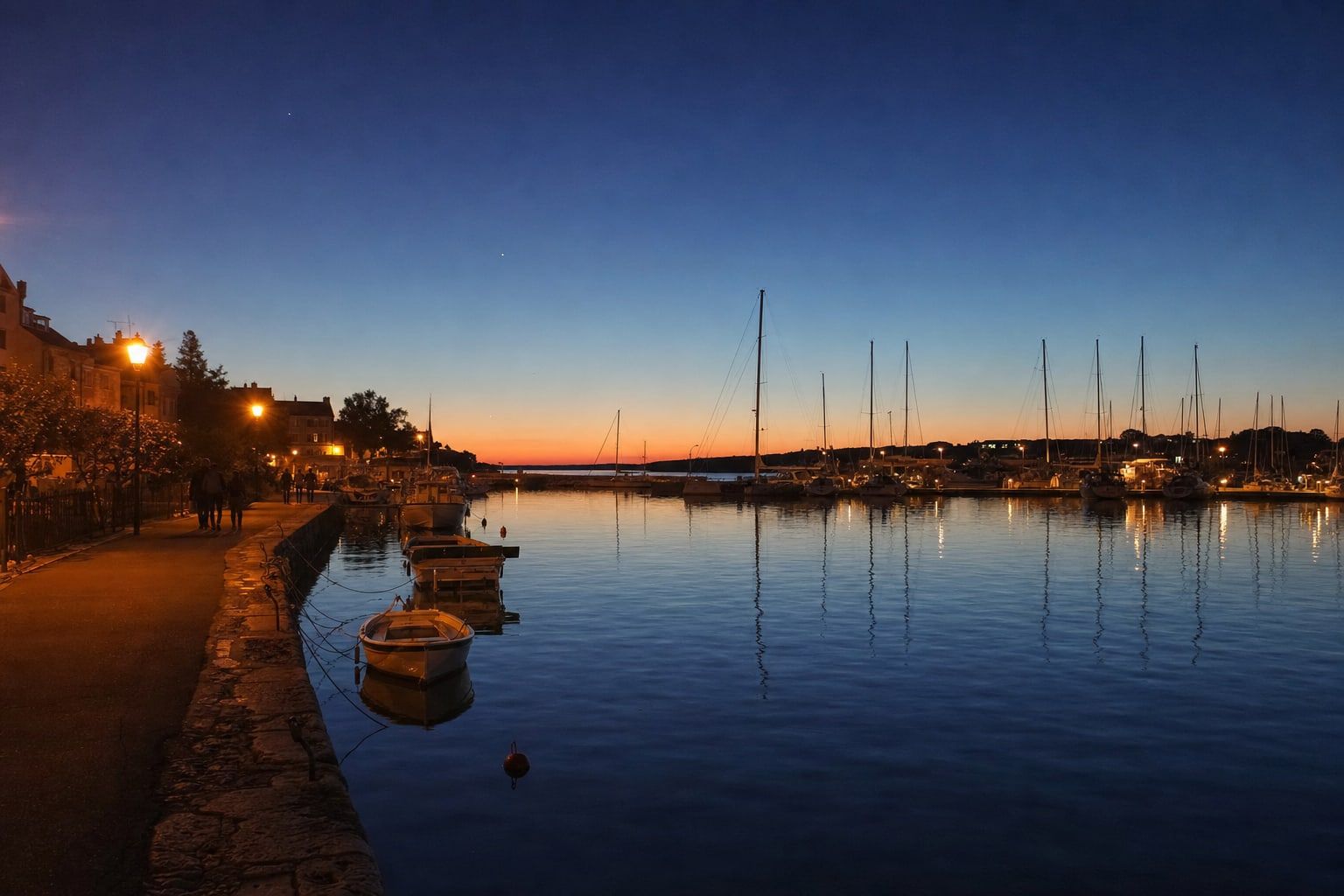
Sunrise and sunset are instants. Twilight is everything that happens around them: the long slide from full daylight to darkness in the evening, and back again before dawn. Astronomers divide it into three stages, each defined by the sun’s angle below the horizon.
The three stages
Civil twilight runs from sunset until the centre of the sun is 6° below the horizon. The sky is still bright, the brightest planets appear, and outdoor activity needs no artificial light. In many countries civil twilight defines when vehicles must use lights.
Nautical twilight runs from 6° to 12°. The horizon is still visible at sea, while the brighter stars are already out, which once made it the time for sailors to take star sightings with a sextant. On land, the landscape turns to silhouettes.
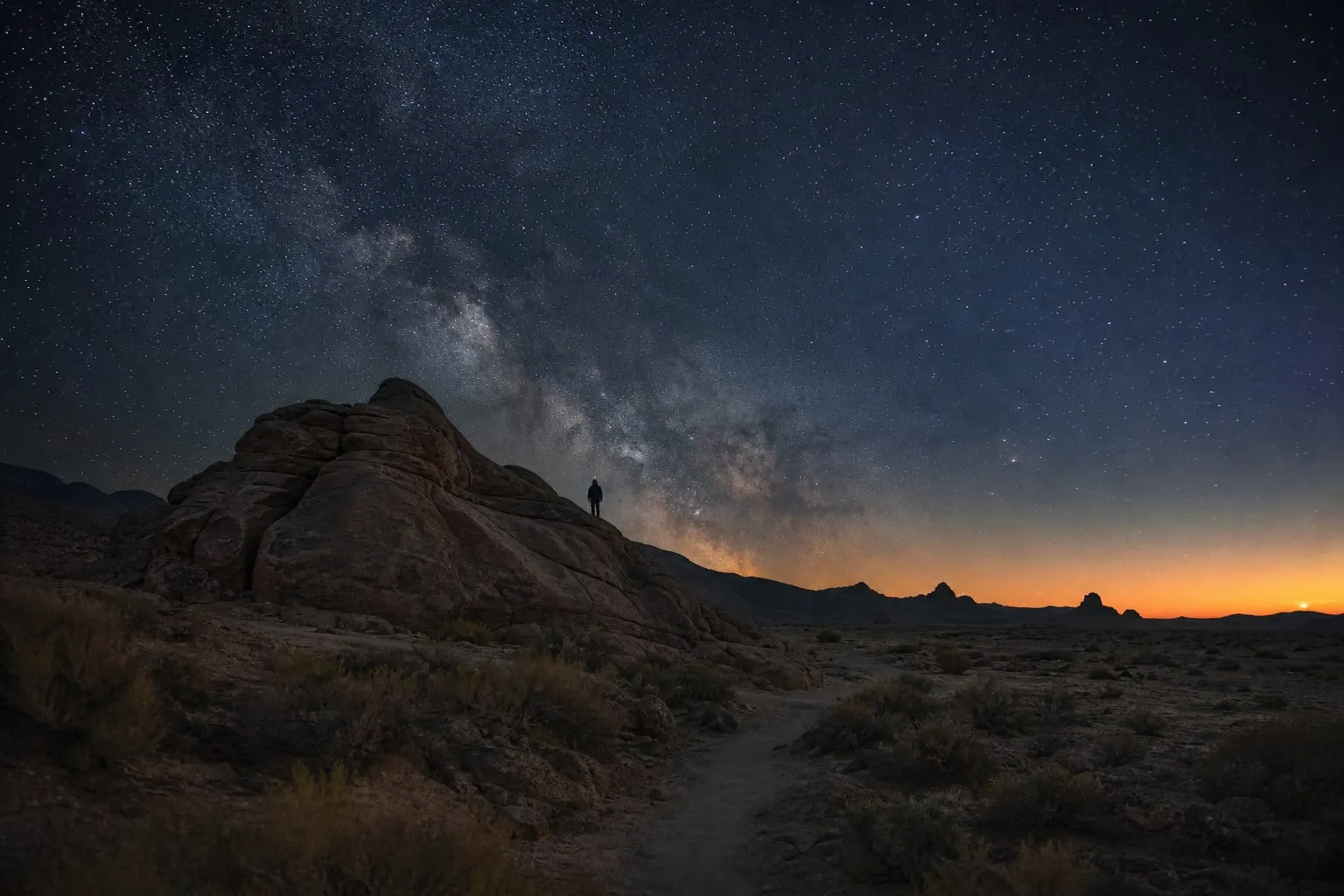
Astronomical twilight runs from 12° to 18°. To the eye the sky looks dark, but faint light still scatters through the upper atmosphere and washes out the dimmest stars and galaxies. Below 18° the sky is as dark as it gets.
In the morning the same stages run in reverse: astronomical dawn, nautical dawn, civil dawn, then sunrise.
How long twilight lasts
Twilight length depends on how steeply the sun’s path crosses the horizon, and that depends mainly on latitude.
- Near the equator, the sun drops almost vertically. Civil twilight lasts about 20 to 25 minutes, and full darkness arrives roughly an hour and ten minutes after sunset. In Quito the sun sets at about 18:03 in mid-October, and the evening is dark not long after 19:15.
- At mid-latitudes, the sun sinks at a slant. In Paris, civil twilight lasts about half an hour in autumn and closer to 45 minutes around the June solstice.
- At high latitudes in summer, the sun may never reach 18° below the horizon. In Saint Petersburg in June, astronomical darkness does not come at all; the city’s “white nights” are a continuous twilight.
The colours
The blue hour that photographers talk about falls mostly within civil and early nautical twilight, when the sun is roughly 4° to 8° below the horizon. Sunlight passes through so much air that red light scatters out, and the sky overhead takes on a deep, even blue. The warm band near the horizon just after sunset, sometimes with a pink “Belt of Venus” opposite, belongs to civil twilight.
The numbers, place by place
Calculated from sunset to the end of each stage of evening twilight:
| Place and date | Civil ends | Nautical ends | Fully dark |
|---|---|---|---|
| Quito, 15 October 2026 | 21 min after sunset | 45 min | 70 min |
| Paris, 15 October 2026 | 32 min | 68 min | 105 min |
| Paris, 21 December 2026 | 37 min | 78 min | 116 min |
| Paris, 21 June 2027 | 43 min | 103 min | never |
| Tromsø, 15 October 2026 | 62 min | 131 min | 203 min |
Two things stand out. Near the equator, darkness comes quickly at any time of year. And in Paris at midsummer the sun never reaches 18° below the horizon: for a few weeks around the June solstice, the city has no full astronomical darkness at all, only a deep twilight in the small hours. Amateur astronomers in northern Europe know this as the season when faint galaxies are out of reach.
Twilight in the morning is not a mirror image
On paper, morning twilight repeats the evening stages in reverse. In practice it often looks different. After a calm night the air near the ground is cooler and clearer, so dawn colours can be sharper; in cities, evening air carries the day’s haze and dust, which deepens sunset reds. Morning twilight is also quieter, which is why many photographers prefer it even though they have to get up for it.
Why sailors cared
Nautical twilight earned its name at sea. To fix a position with a sextant, a navigator needs both stars and a visible horizon at the same time. That window opens only in the middle stage of twilight: earlier, the sky is too bright for stars; later, the horizon disappears. Navigation tables listed nautical twilight times for exactly this reason, and many still do.
Twilight and rules on land
Civil twilight is more than a scientific category. Many jurisdictions use it in law: aviation rules in several countries define night flying from the end of evening civil twilight, and some vehicle-lighting rules refer to it as well. It is a practical boundary, the point where most outdoor tasks need artificial light.
Reading the stages without a table
You can judge the stage roughly by eye. When the first bright planets and the brightest stars appear and the horizon is still sharp, you are in civil twilight. When dozens of stars are visible but a pale band still lies along the western horizon, it is nautical twilight. When that band has gone and the Milky Way begins to show in a dark place, astronomical twilight is ending.
Twilight and the calculated moment
Twilight is sometimes mistaken for sunrise. The sky can be bright enough to read by twenty minutes before the sun appears, and some people date a sunrise from the first light. The calculated sunrise is the later, sharper moment: the upper edge of the sun on the horizon, corrected for refraction.
Every Resthe sunrise and sunset uses that sharp moment, calculated for the exact point you choose, so the time on the certificate is the one the almanacs agree on. You can see it for any place with The Sunrise or The Sunset.