
Full moon names month by month, and where they come from
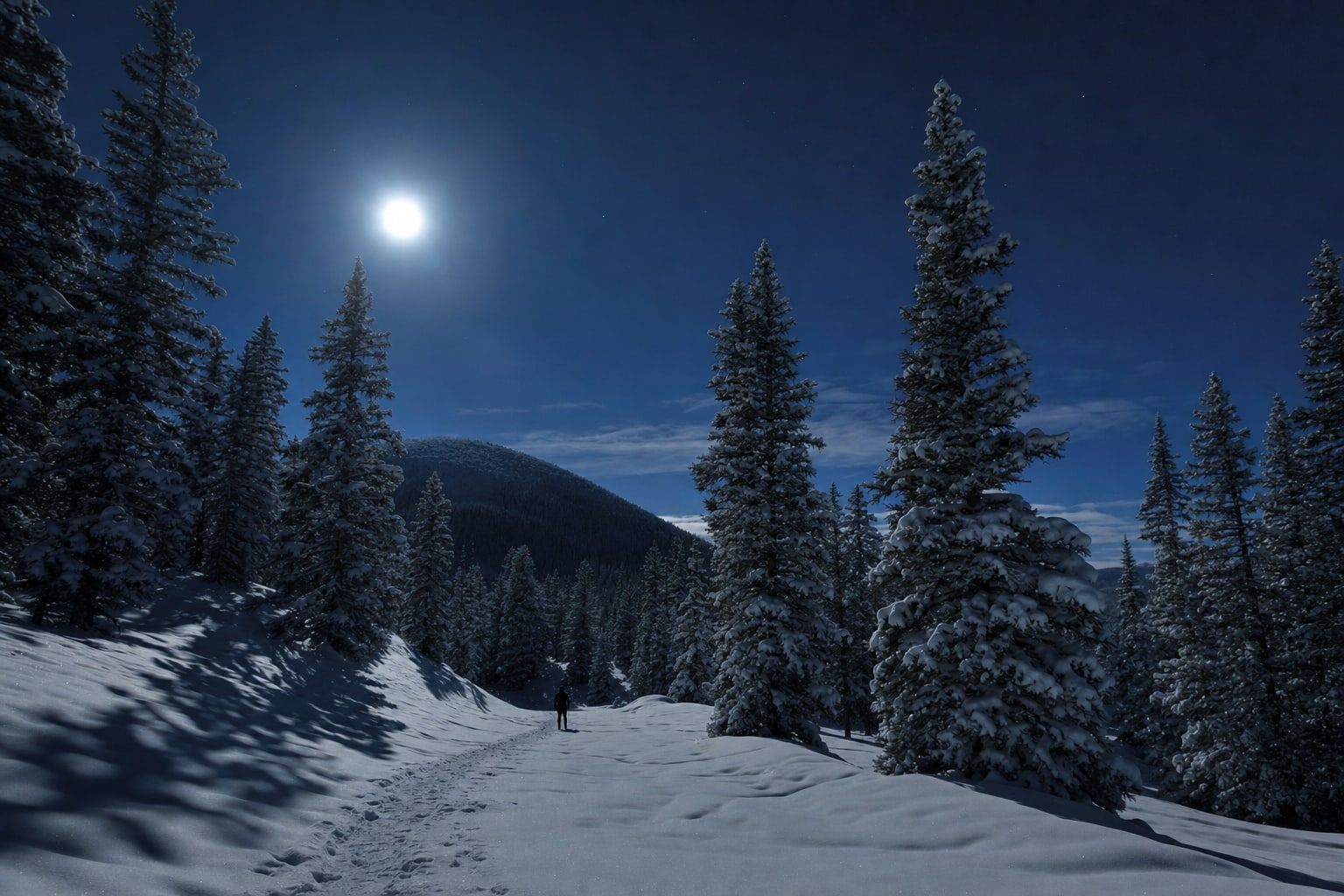
Almanacs and news stories give every full moon a name. Most of the names used in English today were popularised by the Maine Farmers’ Almanac in the 1930s and draw on a mix of Native American, colonial American and European traditions. They are seasonal labels, not astronomical terms, and different peoples used different names for the same moon.
The common names
| Month | Name | Usual explanation |
|---|---|---|
| January | Wolf Moon | wolves heard howling in midwinter |
| February | Snow Moon | the snowiest month in much of North America |
| March | Worm Moon | earthworms returning as the ground thaws |
| April | Pink Moon | early spring wild phlox (moss pink) |
| May | Flower Moon | spring flowers in bloom |
| June | Strawberry Moon | the strawberry harvest |
| July | Buck Moon | new antlers on male deer |
| August | Sturgeon Moon | sturgeon in the Great Lakes |
| September | Harvest Moon* | light for gathering crops |
| October | Hunter’s Moon* | hunting after the harvest |
| November | Beaver Moon | setting traps before the freeze |
| December | Cold Moon | the long cold nights |
* The Harvest Moon is the full moon nearest the September equinox, so it occasionally falls in early October; the Hunter’s Moon is the one after it.
The next full moons
Calculated as the instant the moon is opposite the sun, in UTC:
- Hunter’s Moon: 26 October 2026, 04:11
- Beaver Moon: 24 November 2026, 14:53
- Cold Moon: 24 December 2026, 01:28 (the night before Christmas in Europe and Africa; 23 December in the Americas)
- Wolf Moon: 22 January 2027, 12:17
- Snow Moon: 20 February 2027, 23:23
Convert to local time for your place; in some time zones the date changes.
Near and far moons in the coming year
The moon’s distance at full moon varies by tens of thousands of kilometres, and the next twelve months show the whole range. Calculated distances between the centres of the Earth and the moon at each full moon:
- Cold Moon, 24 December 2026: about 356,700 km, the closest full moon of the period, a supermoon by any definition;
- Wolf Moon, 22 January 2027: about 357,600 km, nearly as close;
- Hunter’s Moon, 26 October 2026: about 368,900 km;
- July 2027 full moon, 18 July: about 406,000 km, the farthest, a micromoon.
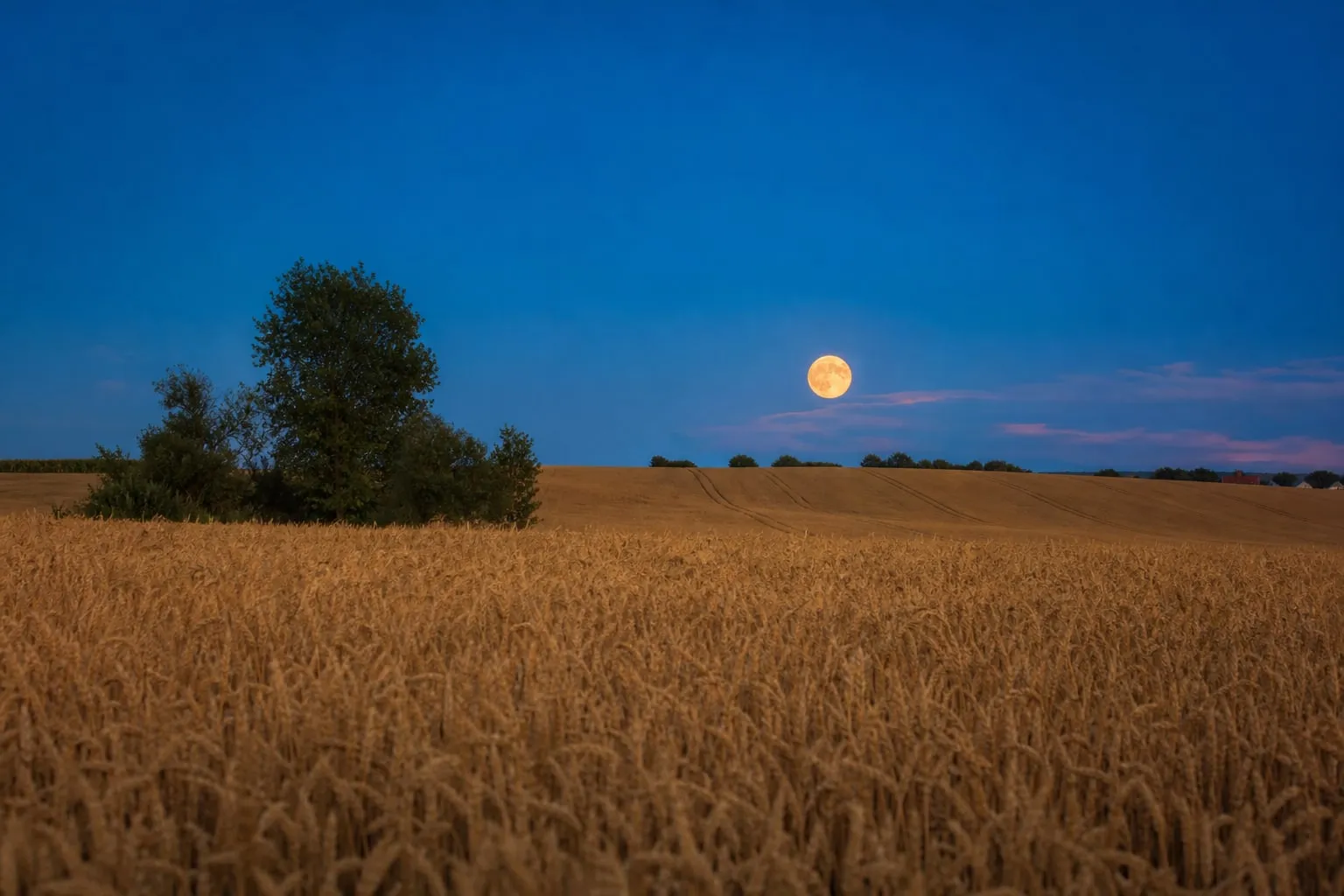
The December full moon will look about 14% wider than the July one. Side by side in photographs the difference is clear; in the sky, months apart, almost nobody notices.
Names in other traditions
The English almanac names are only one set. Many cultures name or celebrate full moons in their own calendars:
- In China and much of East Asia, the full moon of the eighth lunar month is the Mid-Autumn Festival, celebrated with mooncakes and family gatherings.
- In Hindu tradition, each full moon day is a purnima, and several are major festivals, such as Guru Purnima and Sharad Purnima.
- In Sri Lanka, every full moon day is Poya, a public holiday with Buddhist observances; Vesak, in May, is the most important.
- In the Jewish calendar, Passover and Sukkot begin on the 15th of their months, around the full moon.
Because these calendars are lunar or lunisolar, their full moon festivals move against the Gregorian calendar from year to year, while the astronomical moment of full moon is the same for everyone.
Blue moons and supermoons
Two other names come up often. A blue moon has two definitions: the second full moon in a calendar month, or the third full moon in a season that has four. Neither has anything to do with colour. A supermoon is a full moon near perigee, the closest point of the moon’s orbit, when it appears up to about 14% larger and noticeably brighter than at its farthest.
How many full moons in a year
A calendar year usually has twelve full moons, but the lunar cycle, about 29.5 days, is shorter than the average month, so about every two and a half to three years one month gets two. The second is the calendar “blue moon”. The months from October 2026 to the end of 2027 contain fifteen full moons in all, from the Hunter’s Moon of 26 October 2026 to the full moon of 13 December 2027, without any month holding two.
Because the full moon is a single instant, the month it falls in can depend on your time zone: a full moon in the last hours of a month in UTC may fall on the first day of the next month in Asia. Blue moons are therefore not always shared worldwide.
Names on a certificate
Resthe certificates record the date, the place and the exact moment of full moon, and the moon’s illuminated fraction. They do not assign a traditional name, because names vary by culture and some months have several. If the Cold Moon or the Harvest Moon matters to you, put it in your message.
The full moon night chosen for a gift is the local night, sunset to sunrise at your point, whose middle is closest to the moment of full moon. You can see which night that is for any place with The Full Moon Night.