
Gift ideas for someone who loves the night sky
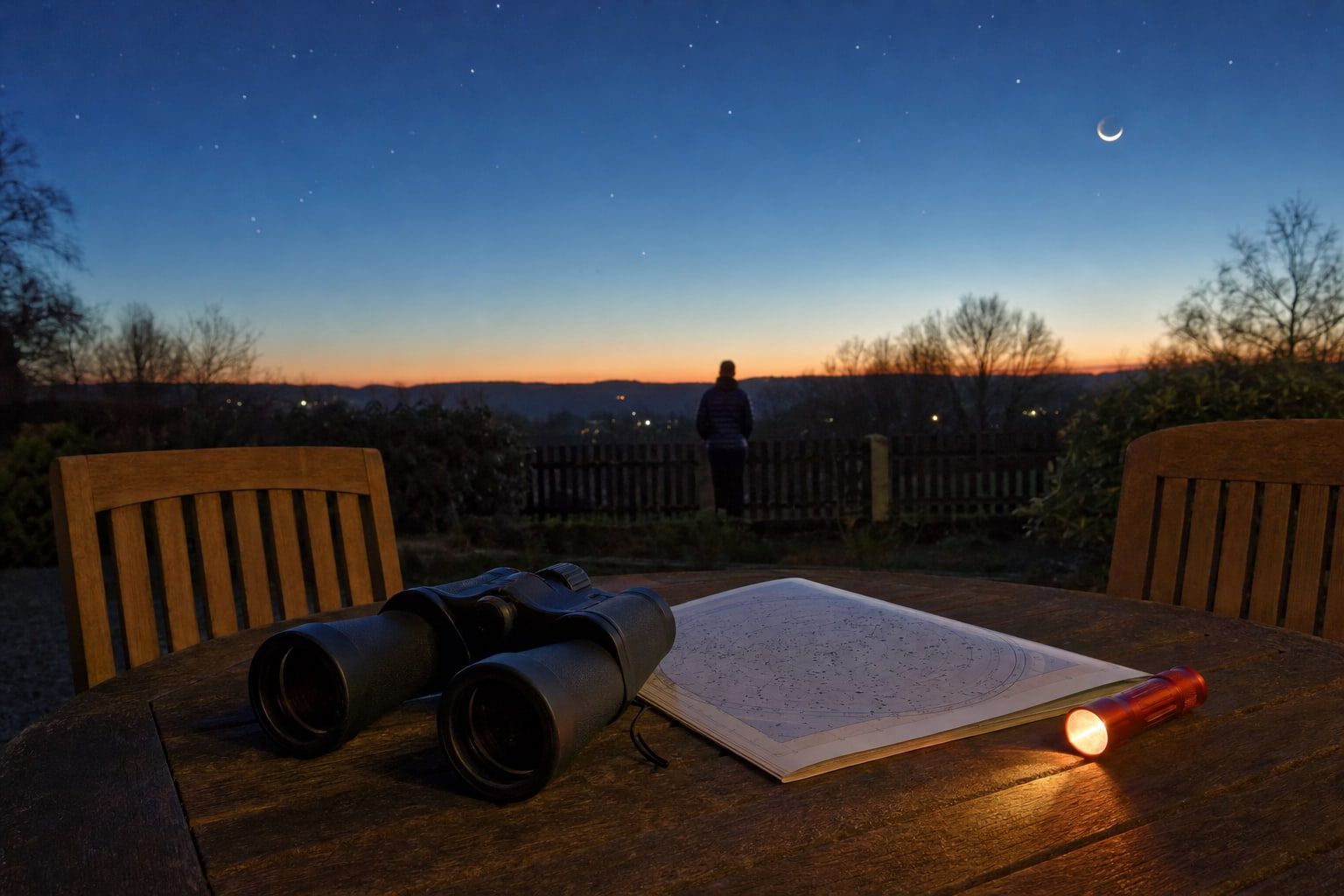
Buying for someone who loves the sky is easier than it looks, and harder than the gift aisle suggests. Many “astronomy gifts” are decorative; the ones that get used are usually simple, sturdy and matched to how the person actually observes. Here are ideas that hold up, from equipment to experiences.
Equipment that gets used
Binoculars. For most beginners, a good pair of 7×50 or 10×50 binoculars is more useful than a cheap telescope. They show the craters of the moon, Jupiter’s four large moons as points of light, star clusters such as the Pleiades, and the Andromeda galaxy as a faint smudge. They also work for birds and landscapes, so they rarely gather dust.
A planisphere. A rotating star chart set to the date and time shows what is above the horizon. It needs no battery and works when a phone would ruin dark-adapted eyes. Buy one made for the right latitude band.
A red torch. Red light preserves night vision. It is inexpensive and noticeably improves an evening outdoors.
A good atlas or observing guide. A well-designed sky atlas or a seasonal guide to the constellations gives structure to an evening. Choose one with charts that show stars to the naked-eye limit, not only bright ones.
Experiences
A dark-sky trip. Designated dark-sky parks and reserves, such as those certified by DarkSky International, offer skies where the Milky Way casts real contrast. A night in or near one is a lasting gift.
A planetarium or observatory visit. Many public observatories run open evenings with views through large telescopes, especially of the moon and planets.
An eclipse or meteor shower plan. Help them be in the right place for the next major event: the Perseids in mid-August and the Geminids in mid-December are the most reliable meteor showers each year.
A moment of their own
For someone who already owns the equipment, a dedicated sky event can be the more personal choice. A full moon night over their house, their favourite observing site, or the place where they first saw Saturn through a telescope can be calculated exactly and recorded with the moment of full moon and the moon’s illuminated fraction. The next full moons are on 26 October 2026 at 04:11 UTC, 24 November at 14:53 UTC and 24 December at 01:28 UTC.
Astronomy-minded people tend to appreciate that the definition is published and precise: the full moon night is the local night whose middle is closest to the astronomical moment of full moon.
Choosing binoculars without guesswork
The two numbers on binoculars are the magnification and the diameter of the front lenses in millimetres. A 7×50 pair magnifies seven times and gathers light through 50-millimetre lenses; dividing one by the other gives the exit pupil, here about 7 millimetres, which matches a young dark-adapted eye and makes the view bright. A 10×50 pair shows more detail, with an exit pupil of 5 millimetres, and is still comfortable to hold for a few minutes. Larger astronomy binoculars such as 15×70 show much more but shake in the hand; they need a tripod adapter, which is worth including in the gift. Weight matters more than most buyers expect: a pair that is pleasant to lift for an hour will be used far more than a heavier one with slightly better specifications.
The sky in the coming months
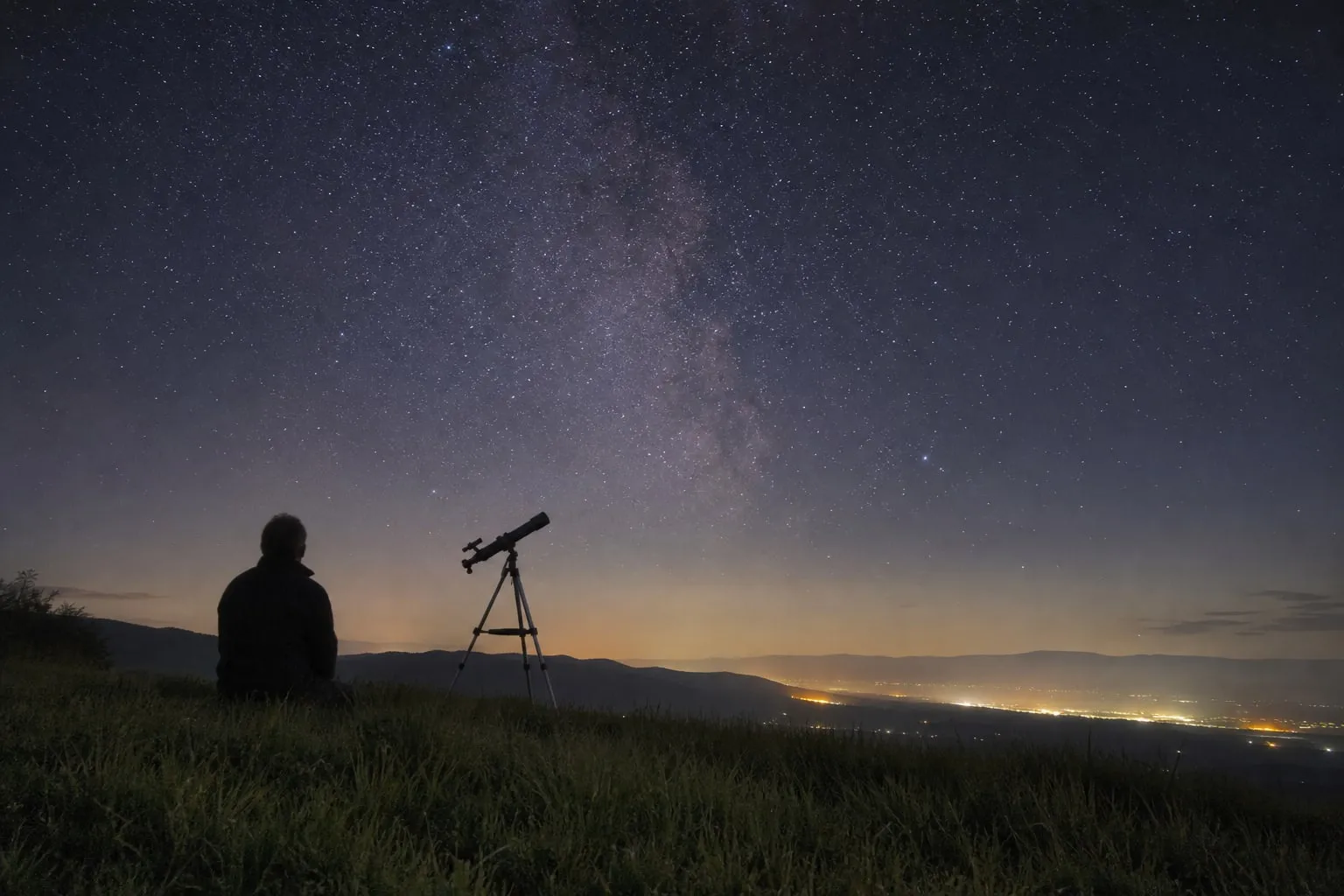
A gift lands better when it comes with something to look at. Calculated for the year ahead:
- Geminids, night of 13–14 December 2026. The richest regular meteor shower of the year, and in 2026 the moon is only about 13 percent lit on the peak night, so conditions are good away from city lights.
- Jupiter at opposition, 11 February 2027. The planet is opposite the sun, up all night and at its brightest; its four large moons are visible in steady binoculars.
- Mars at opposition, 19 February 2027, eight days after Jupiter. This is a distant opposition, so Mars stays small in a telescope, but it is bright and orange to the naked eye.
- Total solar eclipse, 2 August 2027. The path of totality crosses southern Spain, the Strait of Gibraltar and North Africa to Egypt, where near Luxor the total phase lasts more than six minutes. Eclipse glasses and a travel plan make a serious gift.
- Saturn at opposition, 18 October 2027.
The full moons of 2027 fall on 22 January, 20 February, 22 March, 20 April, 20 May, 19 June, 18 July, 17 August, 15 September, 15 October, 14 November and 13 December (UTC dates). The lunar eclipses of 2027 are all penumbral, a faint shading that many people do not notice; the next partial lunar eclipse comes on 12 January 2028. The Perseids of August 2027 will be washed out by a bright moon, about 77 percent lit on the peak night.
Books and software
Two long-standing guides are still the most recommended starting points: Turn Left at Orion, which shows what objects really look like in a small telescope, and NightWatch by Terence Dickinson, a practical introduction with clear seasonal charts. On a computer, the free open-source planetarium Stellarium shows the sky for any place and date, which makes it easy to plan a night or check what was overhead on a particular evening.
Matching the gift to the person
For someone in a city, the moon and the bright planets are the best targets, so binoculars and a lunar map serve better than a deep-sky atlas. For a traveller, a trip under a dark sky or to the 2027 eclipse path is the gift that will be remembered. For a photographer, a sturdy tripod and a remote shutter release are more useful than another lens. For a person who already has everything, a moment in the sky that belongs to an evening in their own life is often the most personal choice.
What to avoid
- Very cheap telescopes sold on magnification (“600×!”) are usually frustrating.
- Gifts that name a star or sell a plot on the moon have no standing; astronomers do not recognise them.
If you would like to give the sky without pretending to sell it, The Full Moon Night dedicates a real full moon over a place you choose, and shows the night before you pay.