
Grand Canyon sunrise from Mather Point and the South Rim
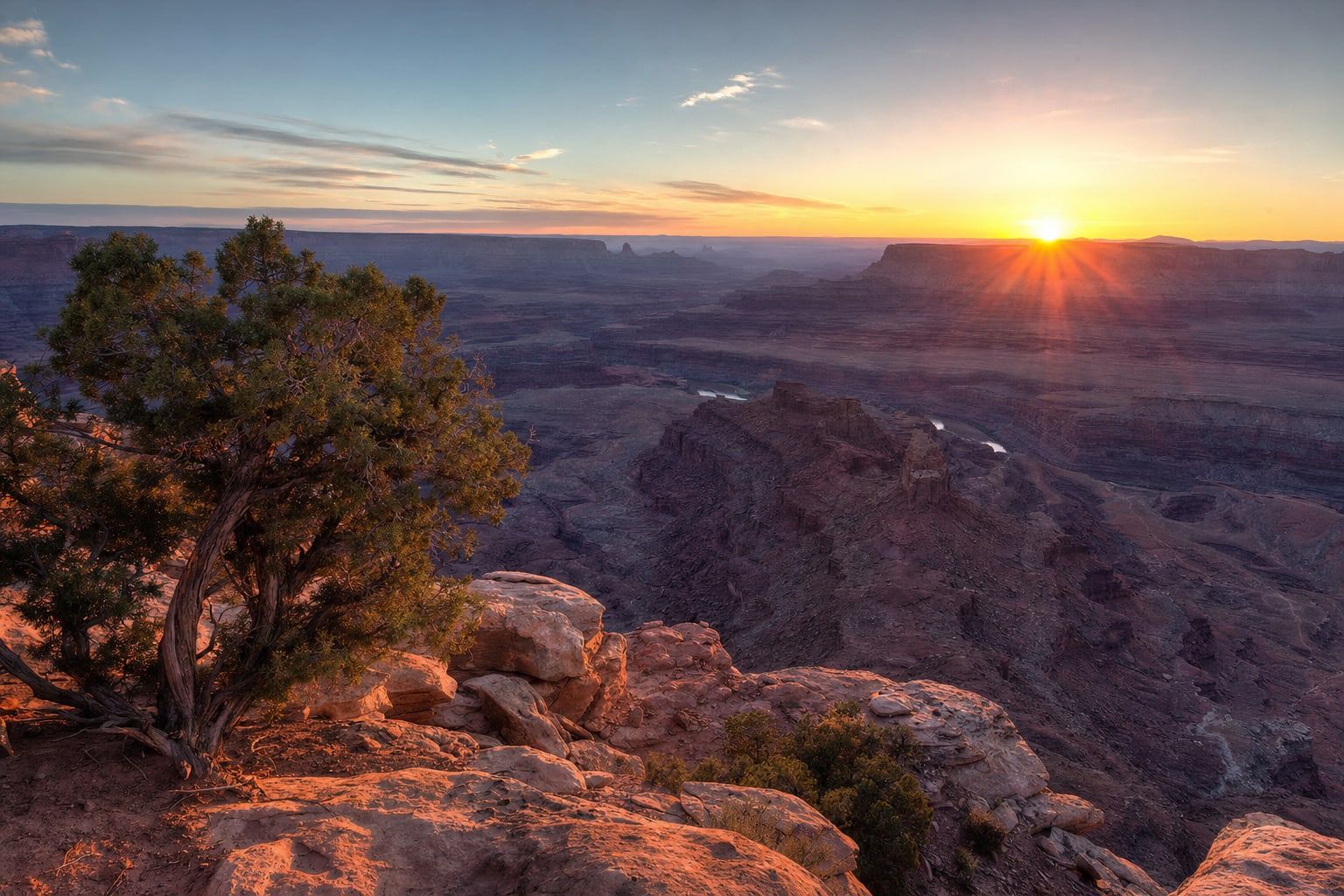
Mather Point, a short walk from the main visitor centre on the Grand Canyon’s South Rim, is where many visitors get their first view into the canyon. It faces north and east over a long stretch of the gorge, and at sunrise the light reaches across the buttes and temples one ridge at a time.
Sunrise times
Calculated with the standard rule for Mather Point, on 1 November 2026 the sun rises at about 06:51 and sets at about 17:32. Arizona does not observe daylight saving time (the Navajo Nation, in the northeast of the state, is the main exception), so Grand Canyon National Park stays on Mountain Standard Time all year. While neighbouring states change their clocks, the canyon’s sunrise keeps its usual pace.
The rim sits at about 2,170 metres (7,120 feet). From there the eastern horizon is slightly below eye level, so the sun appears a little earlier than the flat-horizon calculation.
Where to stand
- Mather Point is the most accessible and the busiest. Arrive at least 30 minutes early to find space along the railings.
- Yaki Point, to the east along Desert View Drive, often has a better eastern horizon. Private vehicles are restricted on part of the road for much of the year, and a park shuttle runs there before sunrise.
- Lipan Point and Desert View, further east, give long views up the canyon toward the Painted Desert.
What the light does
The canyon is at its best in low light. At sunrise, the walls facing east catch the first sun while the inner gorge stays in shadow, and the layers of rock, from the pale Kaibab Limestone at the rim down through the red Supai Group, pick up colour in sequence. Many photographers find the half hour after sunrise more interesting than the moment itself.
Practical notes
- It is cold before dawn on the South Rim from October to April, often below freezing.
- Check the park’s current conditions and road closures before you go; access on both rims changes with the season.
- The park entrance fee is per vehicle, valid for several days.
Through the year at Mather Point
Calculated for Mather Point on Mountain Standard Time, which Arizona keeps all year:
| Date | Sunrise | Direction | Sunset |
|---|---|---|---|
| 21 Dec 2026 | 07:36 | southeast, 119° | 17:17 |
| 20 Mar 2027 | 06:32 | due east, 90° | 18:39 |
| 21 Jun 2027 | 05:12 | northeast, 60° | 19:48 |
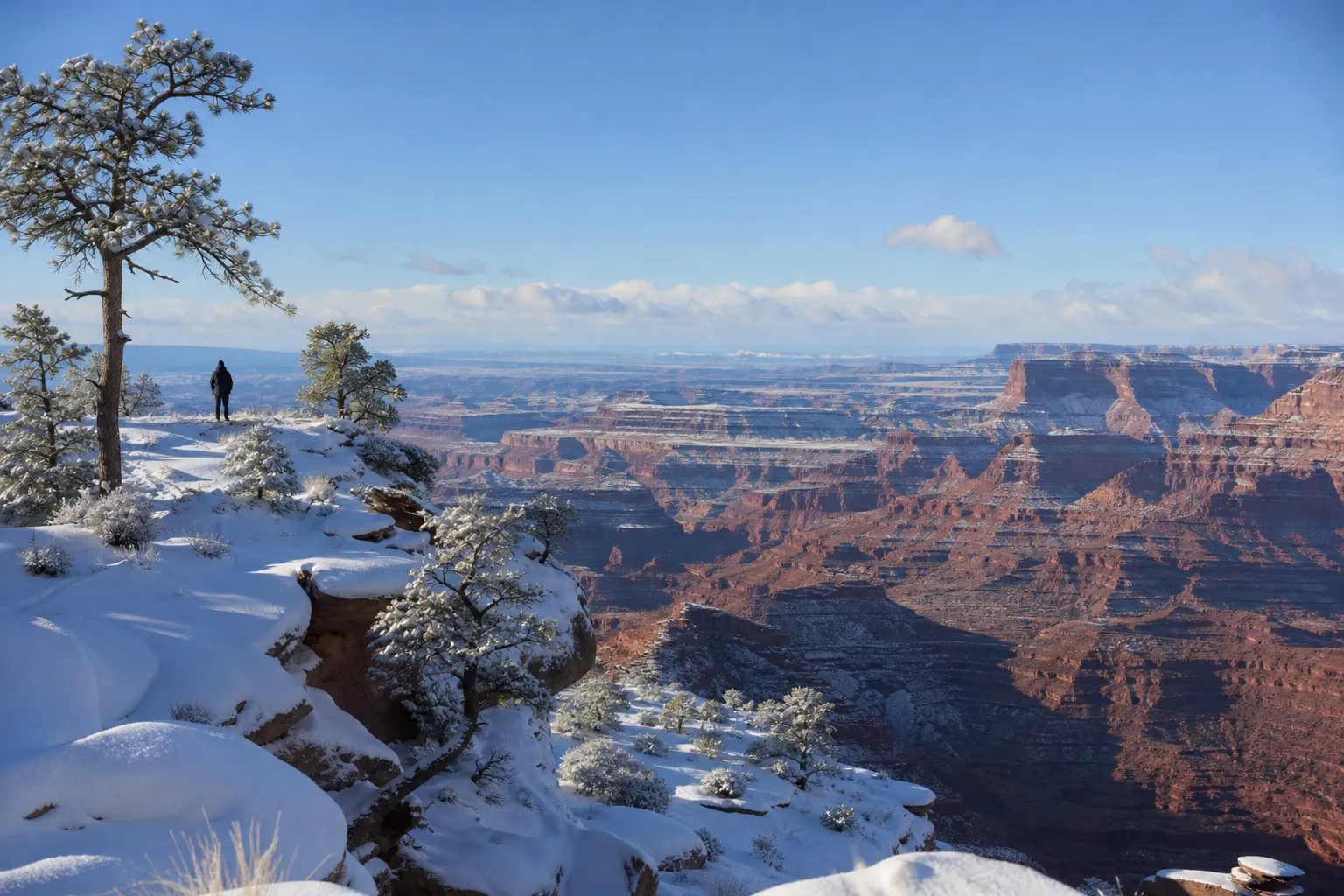
The view from Mather Point looks north across the canyon and east up its length, so the sun rises to the right of the main view all year, over the plateau toward Desert View. In summer it comes up well to the northeast, more nearly in line with the canyon; in winter it rises in the southeast, lower and further to the right, and the shadows in the canyon are long for much of the day. For a sunrise straight over the canyon itself, the summer months are the better season at the east-facing points such as Yaki Point and Lipan Point.
Because Arizona does not change its clocks, the canyon’s summer sunrise reads the same on the clock as one in Los Angeles, which is on Pacific Daylight Time from March to November; in winter Arizona matches Denver instead. Visitors arriving in summer from Utah, or staying in the Navajo Nation, which does observe daylight saving time, sometimes miss a sunrise by an hour for exactly this reason: their phones may show the time of the zone they came from.
The scale of the canyon
From the South Rim near the village, the Colorado River lies about 1,400 metres below and the opposite rim is about 15 kilometres away in a straight line, with the North Rim beyond it some 300 metres higher than the South. That difference in height is enough to change the climate: the North Rim, at around 2,400 metres, gets more snow and is open to visitors only in the warmer months, while the South Rim is open all year. At the bottom of the canyon, the air is far warmer than at the rim, often by more than 10 °C, which is why summer hikers who start at a cool dawn on the rim can face dangerous heat by the river.
A sunrise worth an early alarm
The South Rim is at high altitude, and before dawn in autumn and winter the temperature is often below freezing, with occasional snow from November to March. A warm layer, a hat and gloves make the half hour before sunrise far more pleasant. The park shuttle buses begin running before sunrise for the main viewpoints for much of the year, and the walk from the visitor centre parking areas to Mather Point is short and paved, so the classic view needs no long hike in the dark. Bring a torch anyway; the paths are unlit.
A canyon sunrise as a gift
The Grand Canyon is a common honeymoon stop and a classic family road trip. A sunrise over Mather Point, or the viewpoint where someone stood with you, is easy to recognise and easy to explain. You can pin it and see the exact time of The Sunrise before you dedicate it.