
Hatsuhinode: watching the first sunrise of the year in Japan
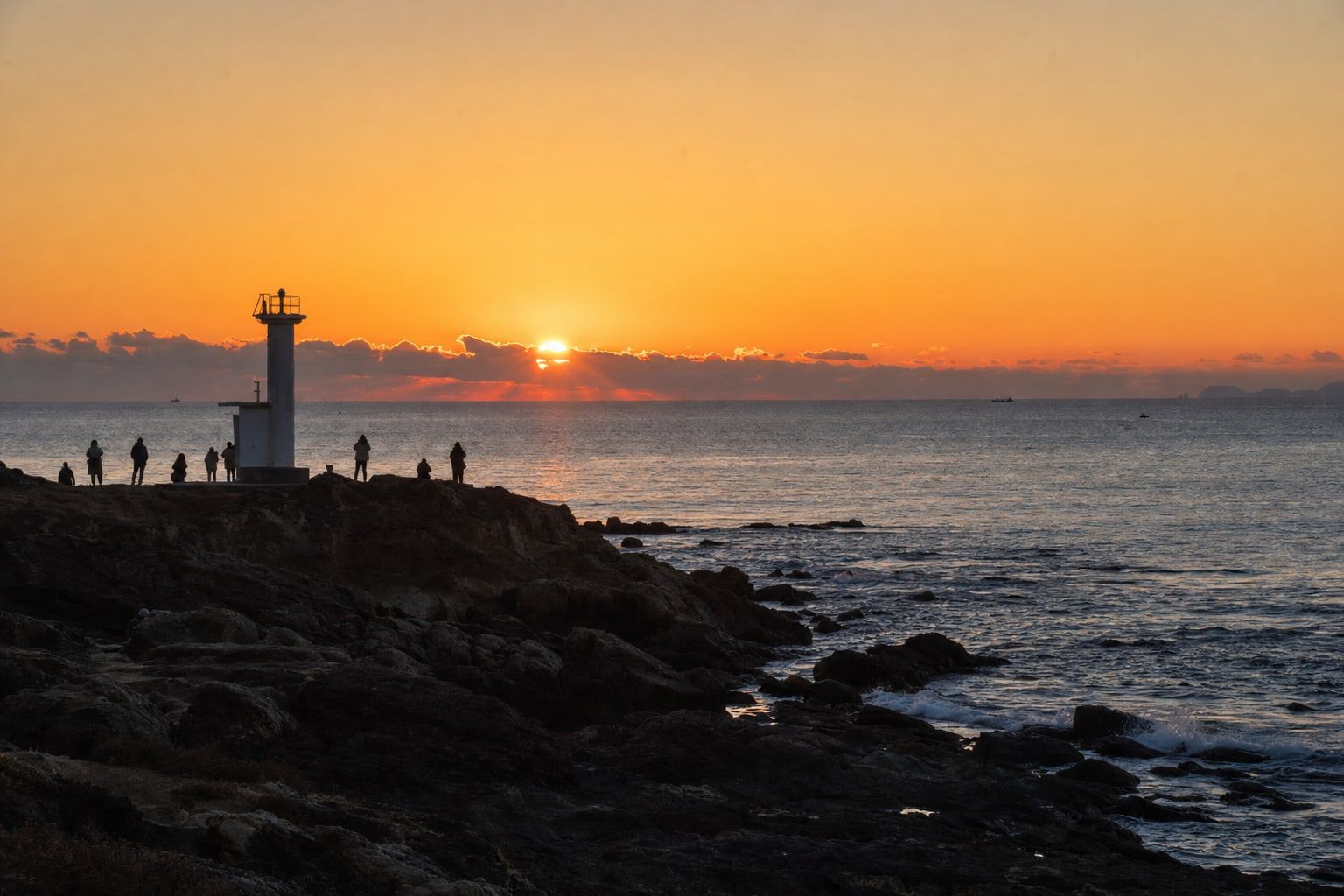
In Japan, the first sunrise of the new year has a name: hatsuhinode (初日の出). Watching it is a long-standing custom, a quiet start to the year that many people combine with the first shrine or temple visit, hatsumōde. On the morning of 1 January, beaches, hilltops, observation decks and even mountain summits fill with people waiting in the cold for the sun.
When it happens in 2027
Calculated with the standard sunrise rule:
- Central Tokyo: about 06:51 on 1 January 2027.
- Cape Inubō (Inubōsaki), Chōshi, Chiba: about 06:46. This cape on the eastern tip of the Kantō plain is known as one of the first places on the main islands, outside the mountains and remote islands, to see the new year’s sun.
Further east and at higher altitude, the sun appears earlier still. Mount Fuji’s summit is closed in winter, but some mountain huts and observation points on other peaks open for the occasion.
Where people watch
- Coasts facing the Pacific. Inubōsaki, the beaches of the Bōsō Peninsula, Enoshima and the coast of Shizuoka.
- City viewpoints. Some observation decks in Tokyo open early on 1 January for a ticketed hatsuhinode viewing.
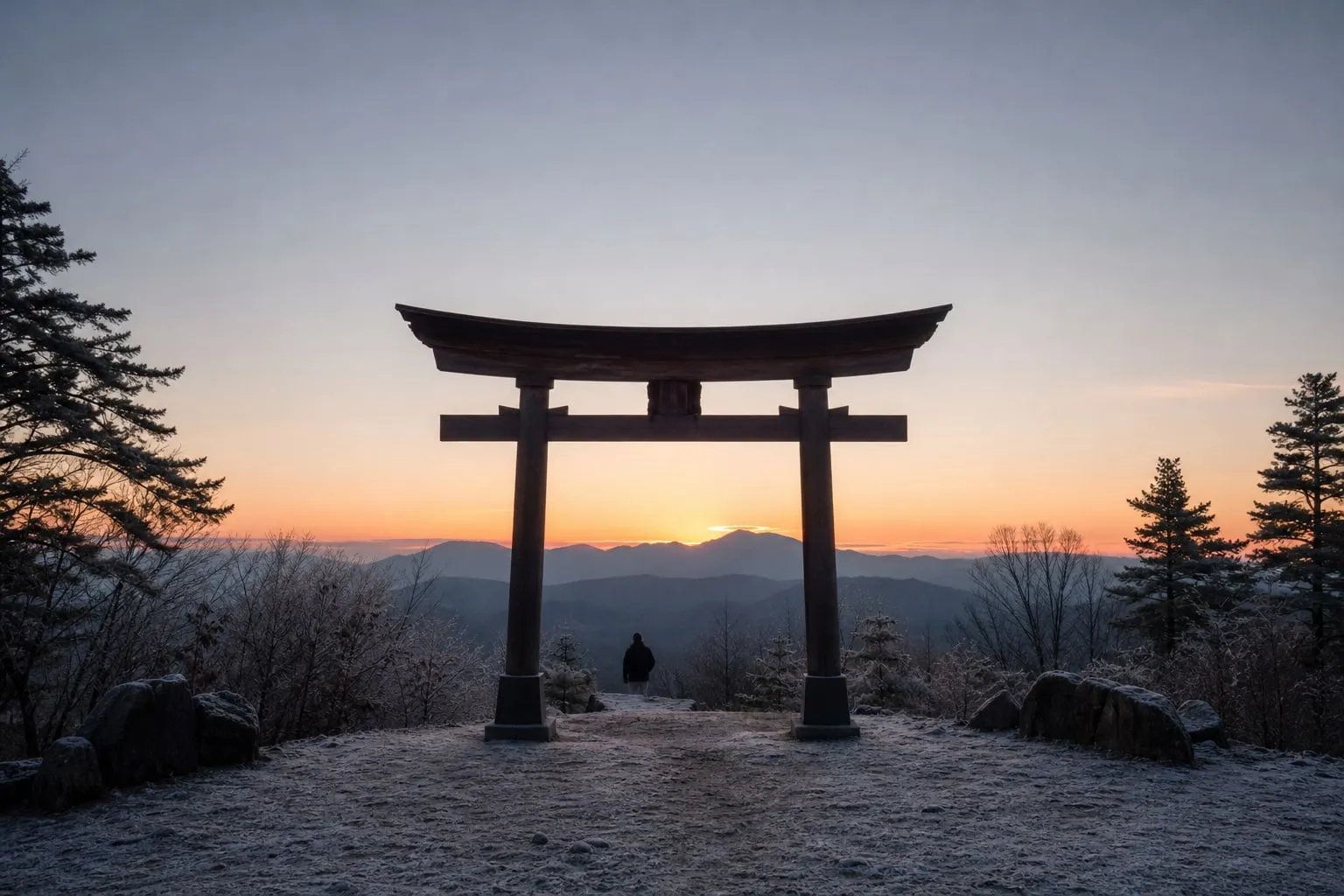
- Shrines on hills. Combining the sunrise with hatsumōde is common.
- Planes and ships. Airlines and ferries have offered special first-sunrise trips above the clouds.
Popular spots are crowded, and public transport often runs through the night on New Year’s Eve in big cities to help people reach them.
Why the first sunrise matters
In Japanese tradition, the new year’s god, Toshigami, is said to arrive with the first sunrise, bringing the blessings of the year. For many people today the custom is less religious than personal: a moment of stillness, a wish for the year, time spent with family or friends in the cold before going home for osechi, the New Year meal.
Elsewhere
Plenty of countries have their own first-sunrise customs. In Korea, crowds gather on the east coast at Jeongdongjin and Homigot. In New Zealand, people climb to watch from the hills around Gisborne, among the first cities to see the new year’s sun, at about 05:46 local summer time on 1 January 2027.
The first sunrise across Japan
Japan stretches over about twenty degrees of latitude and more than twenty of longitude, so the first sunrise of the year does not arrive everywhere at once. Calculated for 1 January 2027 on an ideal sea-level horizon, in Japan Standard Time:
| Place | Sunrise |
|---|---|
| Minamitorishima (remote Pacific isle) | 05:27 |
| Inubōsaki, Chōshi | 06:46 |
| Cape Nosappu, Nemuro, Hokkaido | 06:49 |
| Central Tokyo | 06:50 |
| Sapporo | 07:06 |
| Osaka | 07:05 |
| Naha, Okinawa | 07:16 |
| Fukuoka | 07:22 |
The table explains a piece of local pride. Cape Nosappu is the easternmost point of Hokkaido, yet on New Year’s morning Inubōsaki sees the sun three minutes earlier. In midwinter, places further south get earlier sunrises, and Inubōsaki is about eight degrees of latitude south of Nemuro. Over the whole year the honour moves: in summer the northern cape wins easily. Minamitorishima, a small coral island far out in the Pacific, is first of all, but it has no public access.
Weather on New Year’s morning
Winter in Japan is a season of two coasts. The northwesterly monsoon brings snow and cloud to the Sea of Japan side, from Niigata to the mountains of Tohoku and Hokuriku, while the Pacific side is usually dry and clear, with some of the sunniest days of the year. That pattern favours the Kantō coast, the Bōsō Peninsula and Shizuoka for hatsuhinode, and it is part of why the Pacific capes have become the classic places to watch. The air is cold, often only a few degrees above freezing before dawn on the Kantō coast, so watchers bring blankets, flasks and hand warmers.
Timing the morning
The sky brightens long before the sun appears. Civil twilight, when the horizon is clearly visible and the first colour shows, begins about half an hour before sunrise at this latitude in January. Crowds at popular viewpoints gather well before that. Because the eastern horizon over the sea is often hazy near the water, the sun may be seen a minute or two after the calculated time, as its disc clears a low band of cloud; on a high viewpoint with a clean horizon it appears close to the minute.
Mountains and the view from above
The calculated times above are for sea level. From a summit or a tall building the horizon drops away, and the sun appears earlier, about three minutes earlier from 300 metres above a distant flat horizon and around ten minutes earlier from a high summit. That is part of the appeal of goraikō, the sunrise from a mountain top, which is traditionally watched from Mount Fuji in summer. In winter Fuji itself is closed, but it remains part of the morning for many watchers: from the Fuji Five Lakes and the coast of Shizuoka, the first light of the year turns its snow-covered summit pink.
A first sunrise as a gift
A sunrise on New Year’s morning is a natural dedication for someone you want to start the year with, near or far. You can pin a beach, a shrine or a balcony and dedicate The Sunrise there; ordered in the last days of December, the next sunrise will be the first one of the year.