
Longyearbyen: four months without sunrise, then a festival
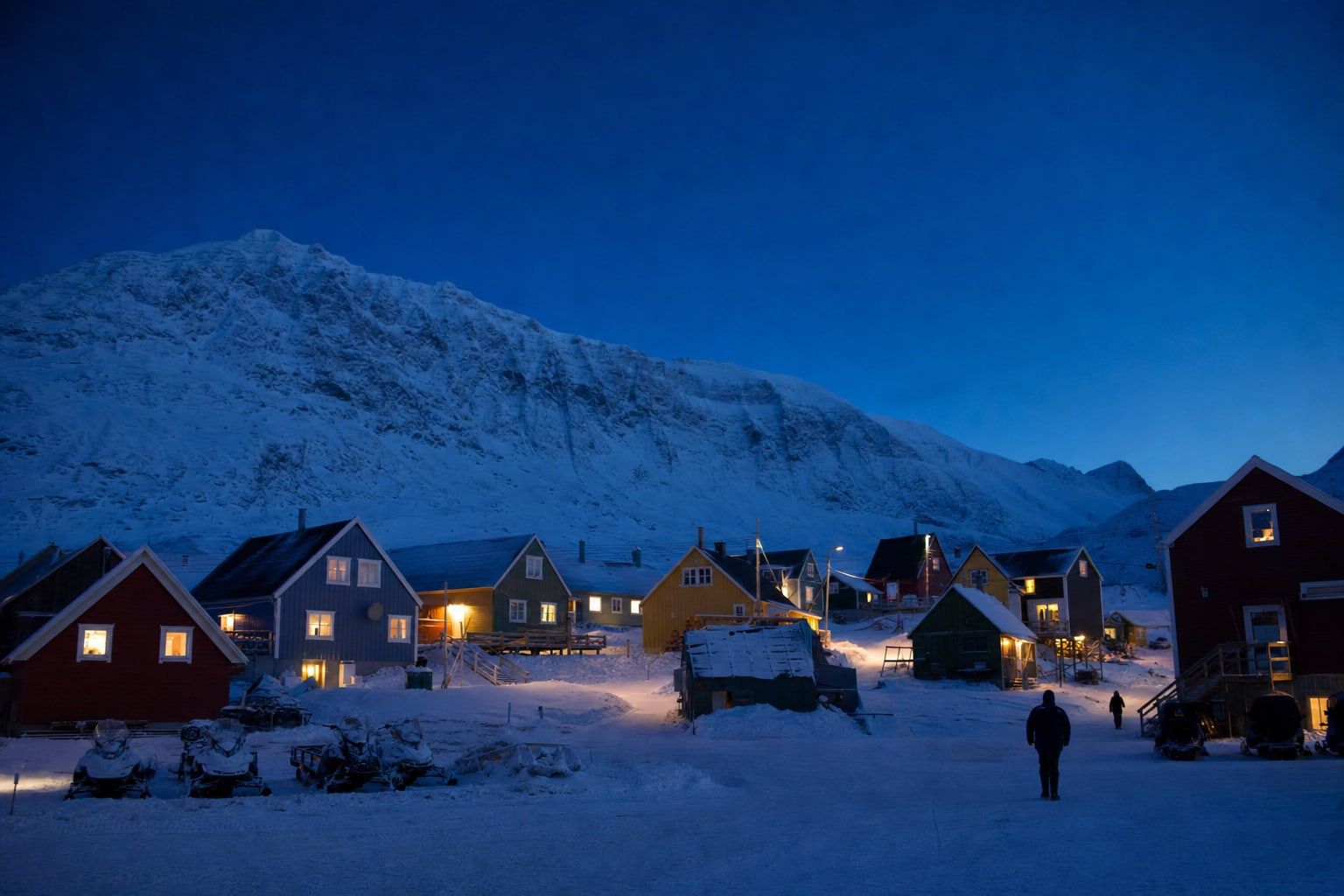
Longyearbyen, on the Arctic archipelago of Svalbard, is one of the most northern towns in the world, at about 78.2° north. Its year is shaped by the sun more than almost anywhere people live.
The dates
Calculated with the standard sunrise rule for the town, on an ideal flat horizon:
- the last sunrise of 2026 is on 26 October;
- the sun does not rise again until 16 February 2027;
- the midnight sun, when the sun stays above the horizon around the clock, runs from about 18 April to 23 August 2027.
That leaves only about four months a year with an ordinary day and night, in spring and autumn.
Not total darkness, but close
The phrase “polar night” covers several shades. Just after the sun disappears in late October, middays are still bright with civil twilight. As the sun sinks further below the horizon at noon, the light fades: from mid-November to late January the sun at midday stays more than 6° below the horizon, so even the brightest part of the day is a deep blue nautical twilight. At the December solstice the sun at noon is about 11.6° below the horizon.
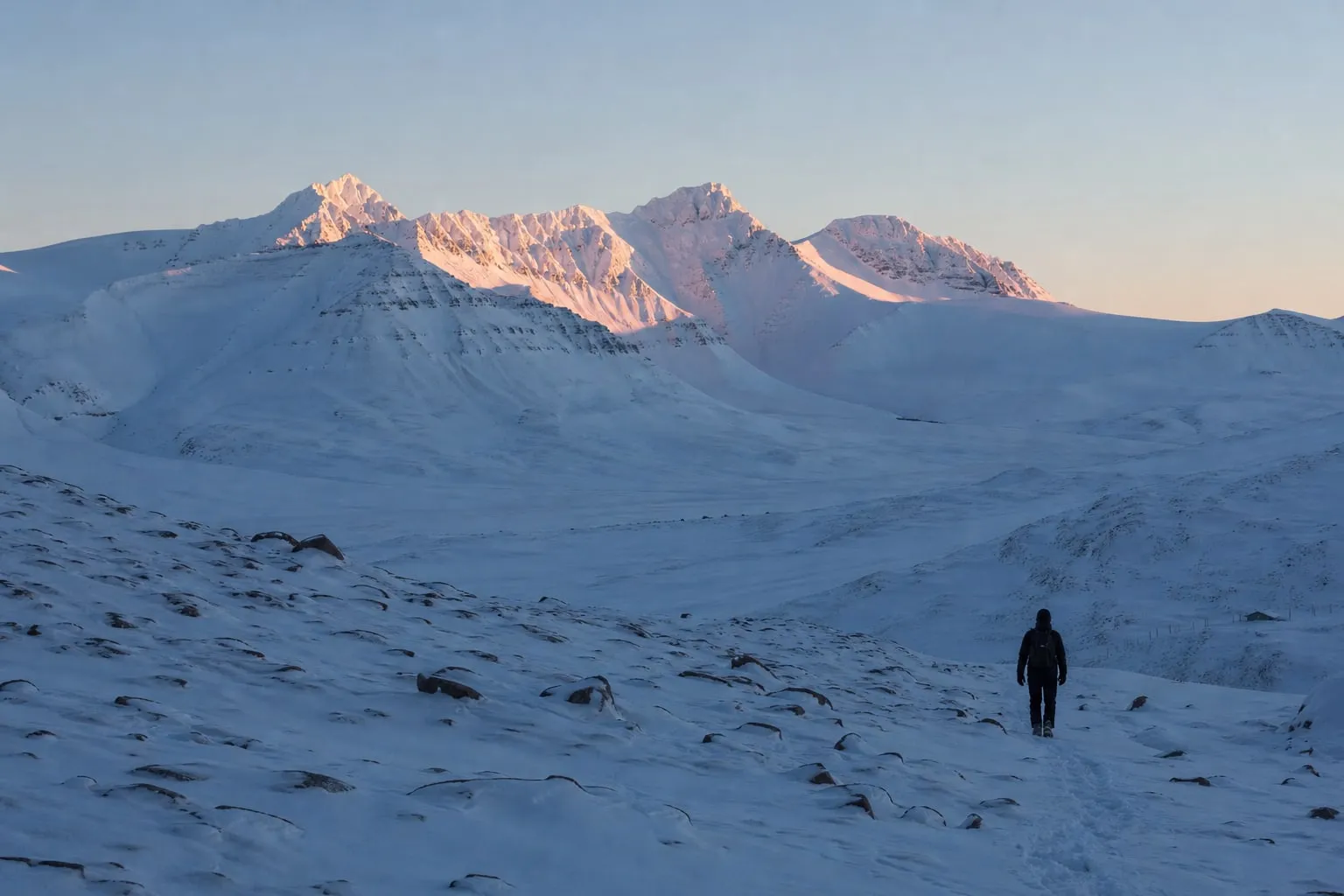
Full moons matter a great deal in these weeks. A winter full moon at this latitude stays up for a long time and lights the snow well enough to see the mountains across the fjord.
Why the festival is in March
Although the sun is above the astronomical horizon from mid-February, Longyearbyen sits in a valley surrounded by mountains. The real sun does not clear them for several more weeks. By local tradition, the sun is considered back when its light reaches the steps of the old hospital, around 8 March. The town marks the return with Solfestuka, the Sun Festival week, with concerts and gatherings.
This is a useful reminder that astronomical sunrise and the first visible sun are different things in mountainous terrain. The calculation answers “when does the sun cross the horizon?”; the landscape decides when you see it.
The light, month by month
- Late October: the last sunrises are brief and low; the sun barely clears the southern horizon at midday.
- November to January: polar night proper. From mid-November to late January even noon stays below civil twilight, and the town relies on street lights around the clock.
- February: the sun returns above the astronomical horizon on 16 February 2027, though the mountains keep it out of sight in town.
- March: the sun reaches the town; the Sun Festival week celebrates it.
- Mid-April to late August: the midnight sun, with the sun above the horizon day and night.
- September and October: days shorten very fast, by more than twenty minutes a day at times, until the last sunrise.
Northern lights at noon
Because the polar night here is so deep, Svalbard is one of the few inhabited places where the aurora can be seen in the middle of the day. Around the winter solstice, the sky at noon is dark enough for the northern lights when they are active, and Longyearbyen sits close to the part of the auroral oval that is active on the day side of the Earth. Visitors who come for the aurora in December sometimes see it over lunch.
Living with it
About 2,500 people live in Longyearbyen year-round, and the town keeps a normal rhythm through the dark months. Shops, schools, the university centre and cafés stay open; snowmobile and dog-sled tours run by headlamp. The main adjustments are personal: daylight lamps, regular sleep, and making the most of moonlit days, when the full moon circles above the horizon for many hours and lights the snow on the mountains.
A clock that keeps mainland time
Svalbard uses the same time zone as mainland Norway, Central European Time with summer time. At 15.6° east, Longyearbyen is almost on the zone’s central meridian, so solar noon comes close to 12:00 in winter and 13:00 in summer. For residents this hardly matters in December or June, when there is no sunrise or sunset to schedule around, but in spring and autumn it means the town’s rapidly changing days are centred neatly on the middle of the clock day.
Visiting in the dark season
Polar night is a real season for visitors, not a closed one. Flights from Oslo and Tromsø run all year, and the dark months bring aurora tours, ice-cave trips and evenings in town that feel very different from summer. Outside the settlement, polar bears are a genuine risk in every season, and the rules on leaving town without a guide or proper protection are strict. Check them, and follow local advice, before any excursion.
Counting sunrises at 78° north
Over the ten years from October 2016 to October 2026, Longyearbyen had 1,254 sunrises by our calculation, about a third of the number a city at mid-latitudes sees. Any count of shared mornings this far north has to find each sunrise individually, because so many days have none.
A sunrise as a gift
For anyone who has lived or worked in Svalbard, or plans to visit, the first sunrise after the polar night is a natural moment to mark. You can pin Longyearbyen and see when the next sunrise falls with The Sunrise; during polar night the site tells you before payment whether one occurs within the product window.