
Sunrise at Haleakalā: what to know before you go
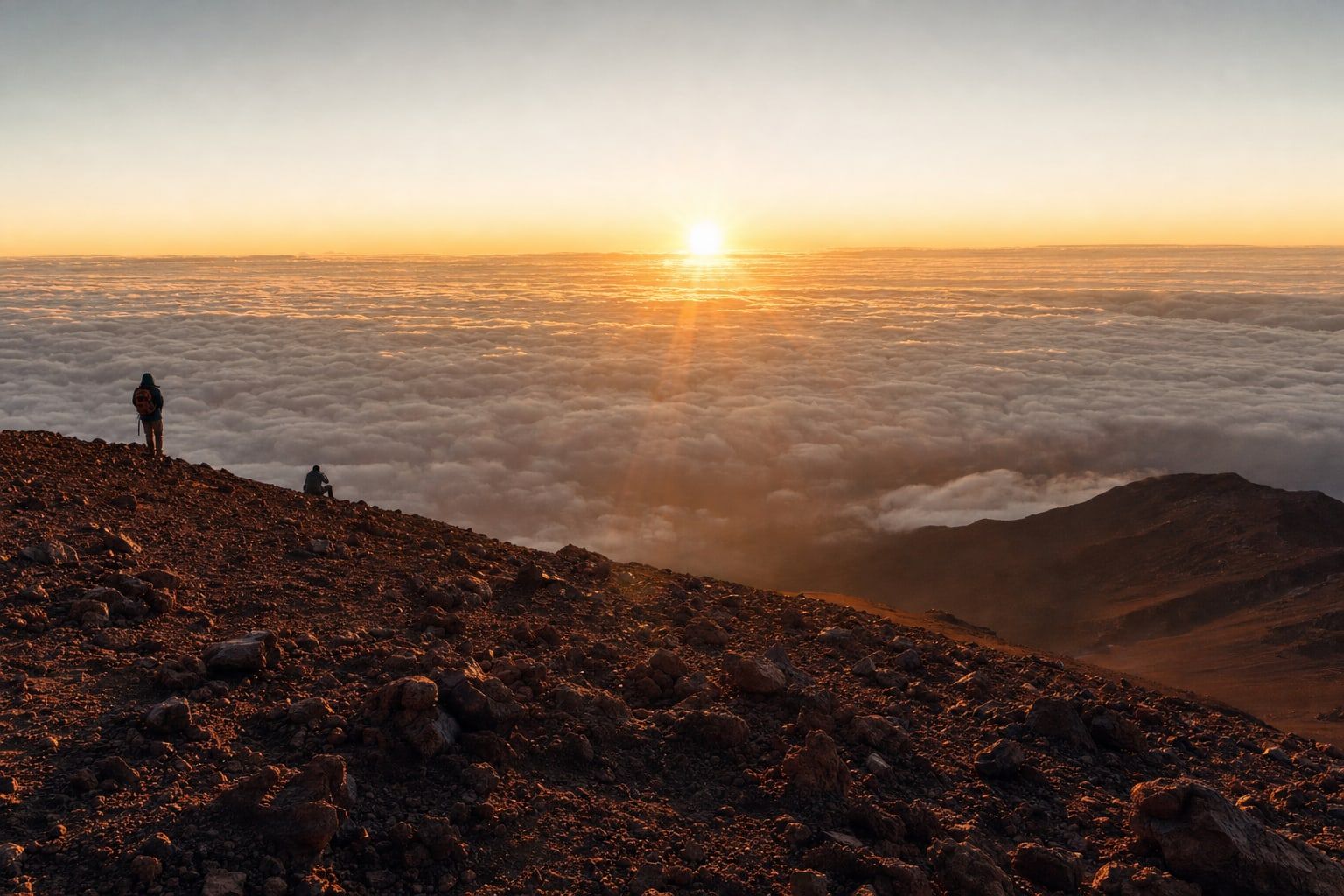
Haleakalā, the volcano that forms most of east Maui, rises to 3,055 metres (10,023 feet). From the summit area the sun comes up over a sea of cloud that usually sits well below the rim, and that view has made it one of the most visited sunrise points in the United States.
You need a reservation
Haleakalā National Park requires a sunrise reservation for each vehicle entering the summit district between 3:00 and 7:00 a.m. Reservations are released in advance through the federal recreation booking system and often sell out. Without one, rangers will turn you back at the entrance, however early you arrive. Check the park’s current rules before you plan the trip; they have changed over the years.
What time is sunrise up there?
Calculated for the summit coordinates with the standard rule, sunrise in mid-October 2026 is at about 06:20 Hawaii time, and sunset at about 18:00. Hawaii does not use daylight saving time, so the clock stays on HST all year.
Two things will make the sun appear a little earlier than that for someone standing at the rim:
- Elevation. From 3,000 metres the horizon lies below eye level, a few degrees down. The sun’s upper edge reaches that lower horizon a few minutes before it reaches the ideal flat horizon used in standard calculations.
- Cloud. If the cloud layer is low and flat, it acts as a raised horizon of its own, and the sun can clear it slightly later than the sea horizon. The two effects partly cancel, and every morning is a little different.
The sky starts to brighten long before sunrise. Civil twilight, when the summit is light enough to walk around without a torch, begins around 25 minutes earlier.
Cold, wind and altitude
It is easy to forget, in a Hawaiian holiday, that the summit is often near or below freezing before dawn, with wind on top of that. Bring layers, a hat and gloves. The thin air at 3,000 metres can also affect people with heart or breathing conditions, and the park advises against bringing infants or anyone who has been scuba diving in the previous 24 hours.
Choosing a spot
The visitor centre near the summit and the Puʻu ʻUlaʻula summit area both look east across the crater. Arrive early enough to park and let your eyes adapt; the stars before dawn, far from city light, are part of the experience.
The house of the sun
Haleakalā means “house of the sun” in Hawaiian. In the best-known story, the demigod Māui climbed to the summit and lassoed the sun as it rose, refusing to let it go until it agreed to cross the sky more slowly, giving the island longer days to dry kapa cloth and grow food. The mountain is a sacred place, and the park asks visitors to treat the summit with respect: stay on trails, keep noise down at dawn, and leave stones where they are.
Sunset and stars instead
The sunrise reservation rule applies only to the early morning. Sunset at the summit needs no special permit beyond the park entrance fee, and it is often less crowded. On clear evenings the sun drops into the cloud sea to the west, and after twilight the sky above 3,000 metres is among the darkest and steadiest in the United States. For the same reasons, the summit hosts the Haleakalā Observatories, including the Daniel K. Inouye Solar Telescope, the largest telescope in the world built to study the sun.
The silversword
Along the crater rim and on the cinder slopes grows the Haleakalā silversword, ʻāhinahina, a spiky silver plant found nowhere else on Earth. It can live for decades before sending up a single tall flowering stalk, then dies after flowering. The plant was nearly wiped out in the early twentieth century and is protected; walking off-trail can crush its shallow roots.
Getting there and what to bring
The Haleakalā Highway climbs from near sea level to above 3,000 metres in roughly 60 kilometres of switchbacks. Allow around two hours from Kahului, longer from the west side of the island, and drive the upper road slowly in the dark: cyclists, nēnē geese and cattle use it too. There is no food or fuel in the park.
Bring warm layers, a hat, gloves and a blanket; summit temperatures before dawn are often near or below freezing, and wind makes it feel colder. A headlamp with a red setting helps on the short walk from the car park without dazzling others. Check the summit forecast the evening before: on some mornings the summit itself is in cloud, and the view is a wall of grey.
A morning on the crater rim
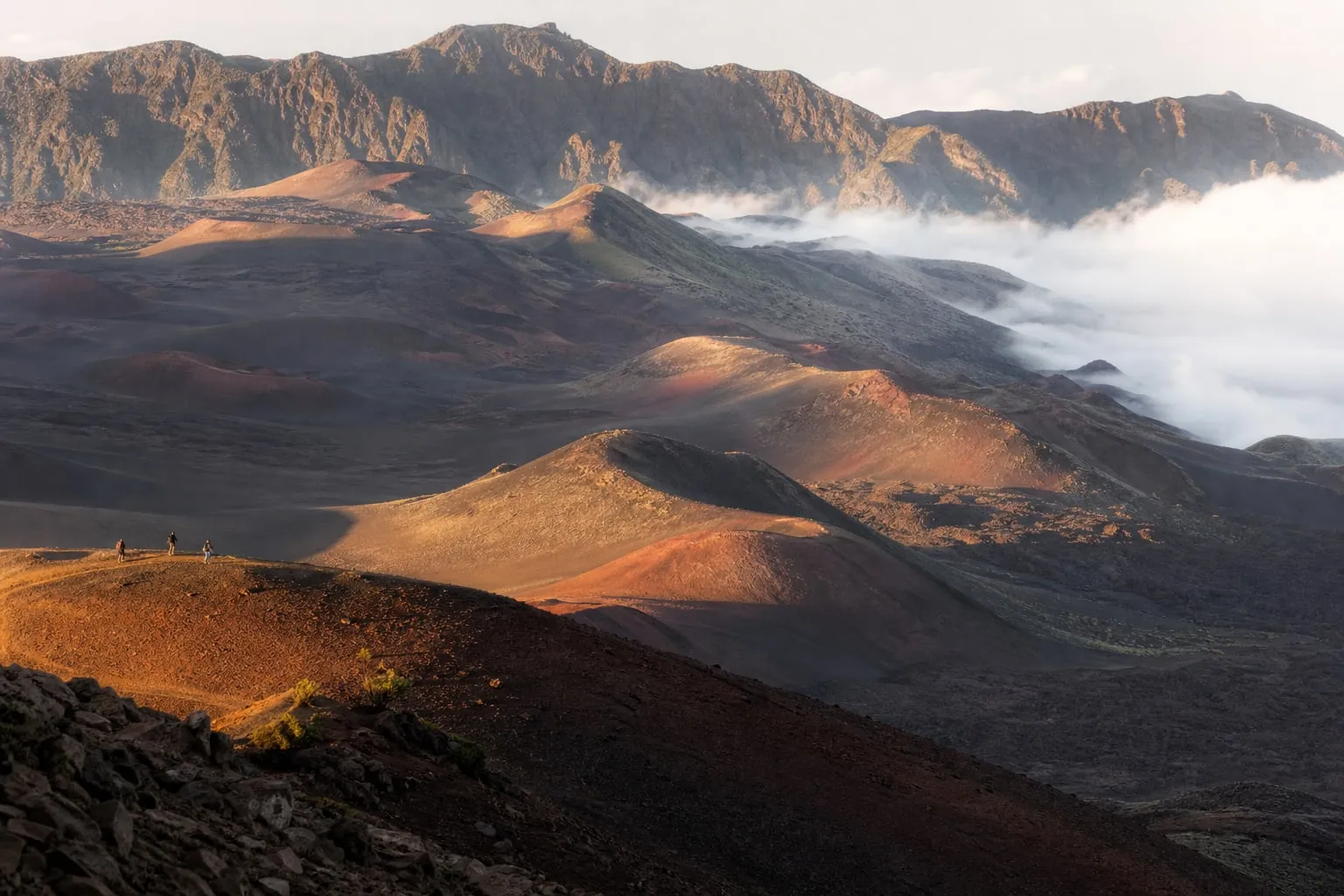
Most visitors arrive in full darkness under a sky crowded with stars. About an hour before sunrise a thin orange line appears along the eastern horizon; the cloud sea below turns from black to grey to pink, and the crater walls emerge from the dark in deep red and brown. When the sun finally clears the clouds, many people applaud, and someone in the crowd, often a ranger or a local guide, sometimes greets the sun with E ala ē, the traditional Hawaiian chant for the rising sun. Then the crowd thins quickly, and the crater, lit from the side, is at its most detailed for the next half hour.
If you cannot be there
A Haleakalā sunrise happens every morning whether or not anyone has a reservation. You can pin the summit, or any point on Maui that means something to you, and dedicate the next sunrise there to someone, with the exact time calculated for that point. The Sunrise shows the time before you pay.