
Sunrise at Uluru: the viewing areas, times and rules
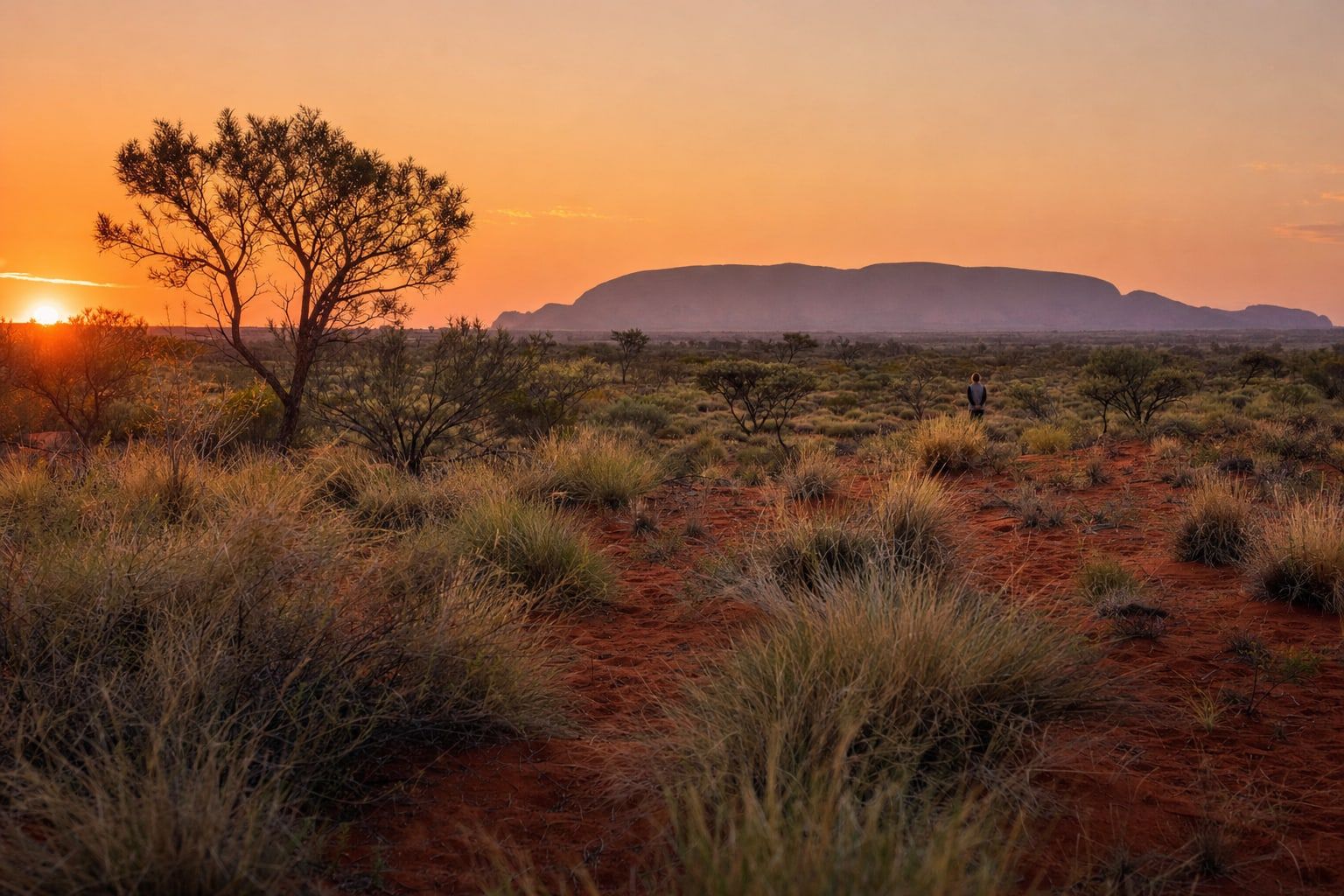
Uluru rises about 348 metres above the plain in Australia’s Northern Territory, in Uluru-Kata Tjuta National Park. It is sacred to the Anangu, the Aboriginal traditional owners, who manage the park jointly with Parks Australia. For visitors, sunrise and sunset are the two times of day when the rock is at its most striking, shifting through ochres and deep reds as the light changes.
Sunrise times
Calculated with the standard rule for the rock, on 15 October 2026 the sun rises at about 06:11 and sets at about 18:51, Australian Central Standard Time. The Northern Territory does not use daylight saving time, so the clock stays on UTC+9:30 all year, even when neighbouring South Australia moves its clocks forward.
The sky over the desert begins to brighten long before that. Civil twilight starts around 25 minutes before sunrise, and that is when the rock’s outline first shows.
Where to watch
The park has designated viewing areas, and it asks visitors to use them.
- Talinguru Nyakunytjaku is the main sunrise viewing area, on dunes to the east, with views of both Uluru and Kata Tjuta. It opens before dawn.
- The sunset viewing area on the western side is the classic spot in the evening, when the setting sun lights the rock’s western face.
- At Kata Tjuta, the domes about 40 kilometres to the west, there is a separate dune viewing area.
A park pass is required, and opening hours change with the season; check them before planning an early start.
The climb is closed
Climbing Uluru was permanently closed on 26 October 2019, following a decision by the park board in line with the wishes of the Anangu. The rock is to be seen, walked around and learned about, not climbed. The base walk, about 10 kilometres, is best done early in the morning before the heat.
Photography of some sensitive sites around the base is restricted for cultural reasons; signs mark them.
Why the colour changes
The rock is arkose sandstone rich in feldspar, and iron oxide on its surface gives it the red colour. At sunrise and sunset, sunlight reaching it has crossed a long path through the atmosphere, losing its blue light. What remains is red and orange, which deepens the rock’s natural colour. A few minutes after sunrise the effect fades as the sun climbs.
Through the year
Uluru’s sunrise moves a long way with the seasons. Calculated for the rock, on the December solstice the sun rises at about 05:52 and sets at about 19:35; on the June solstice it rises at about 07:30 and sets at about 18:04. Because the Northern Territory keeps the same clock all year, these times change only with the sun, not with daylight saving.
Summer days are long and very hot, often above 40 °C, and the park closes some walks in extreme heat. Winter mornings, from June to August, are cool and clear, sometimes near freezing at dawn, with comfortable days. Many visitors find the cooler months the best time for sunrise.
Tjukurpa
For the Anangu, Uluru is not only a landmark but a place where the Tjukurpa, the foundation of their law, knowledge and culture, is present in the land. Features of the rock record the actions of ancestral beings, and some places around it are sacred and closed to visitors or to photography. The Cultural Centre near the rock is the best place to start a visit: it explains what you are seeing in Anangu terms, and why some stories are not shared.
Field of Light
Since 2016 the artist Bruce Munro’s Field of Light has filled a stretch of desert near the resort with tens of thousands of solar-powered lights on slender stems. It can be visited at dusk and before dawn, and some tours combine it with the sunrise over Uluru. It is a separate, ticketed experience run outside the national park.
Kata Tjuta at sunrise
About 40 kilometres west of Uluru, the 36 domes of Kata Tjuta rise even higher, the tallest, Puli, standing about 546 metres above the plain. Its sunrise viewing area faces the domes from the east, and many visitors alternate: sunrise at one, sunset at the other. The Valley of the Winds walk between the domes is best started early, and closes in the hottest part of the day when temperatures are extreme.
Practical notes
- Water: carry plenty, even on short walks; the park recommends about a litre per hour in the heat.
- Flies: in the warmer months, a fly net for the face is a cheap and welcome purchase.
- Respect closures: some sites are closed for cultural reasons, and signs explain where photography is not allowed.
The colours from the air
Scenic flights by small plane or helicopter run at sunrise and sunset from Ayers Rock Airport, giving a view of Uluru and Kata Tjuta together with the dunes around them. Drones are not allowed in the national park without a permit, and flights are best booked a few days ahead in the cooler months.
A sunrise for someone who has been there
For people who travelled to the Red Centre together, or plan to, a sunrise over Uluru is a natural moment to dedicate. You can pin the viewing area or anywhere in the park and see the exact time of The Sunrise before you pay.