
Beaver Moon 2026: the full moon of 24 November, which night to look
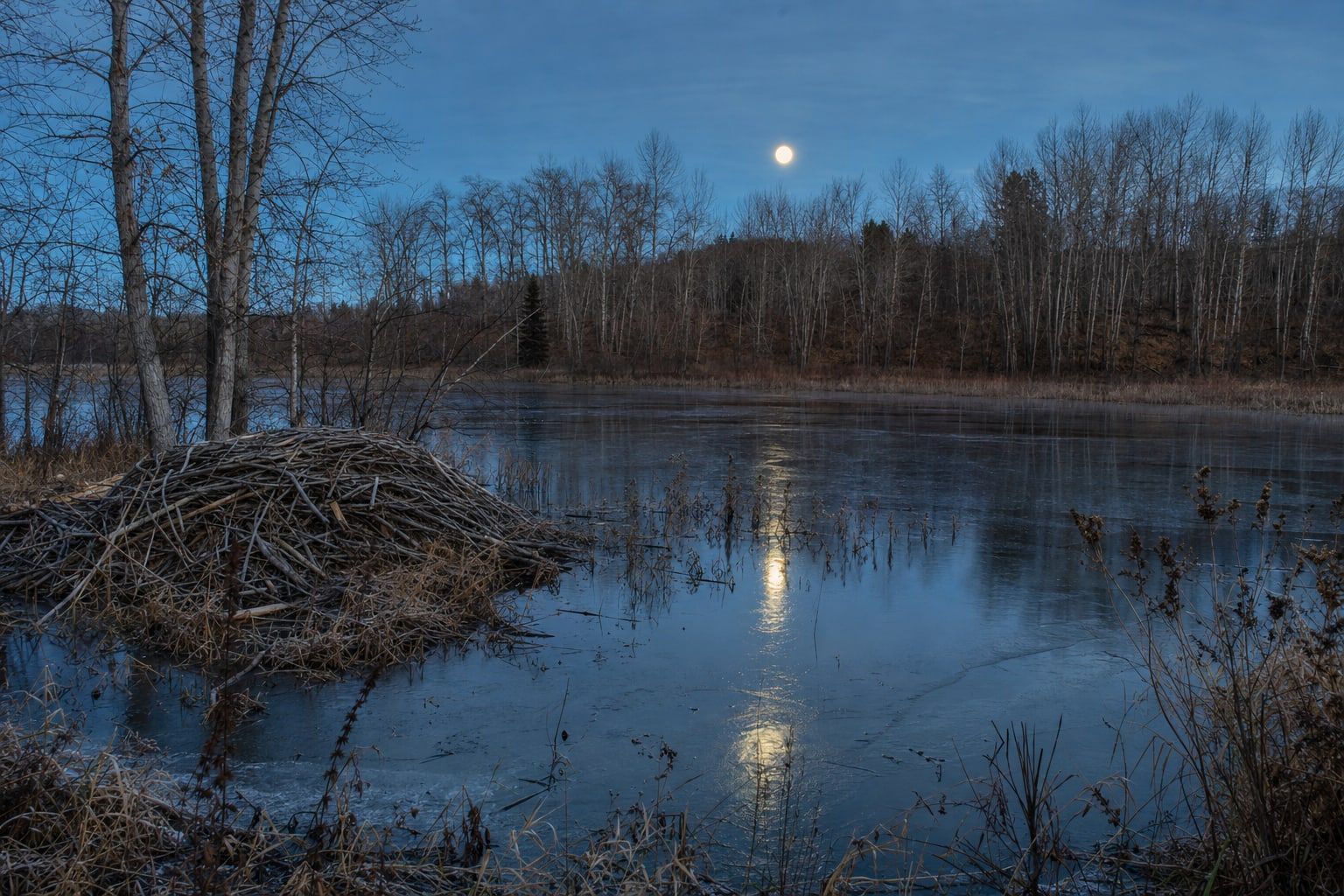
The full moon of November 2026 reaches its exact moment at 14:53 UTC on Tuesday, 24 November. In the North American almanac tradition it is the Beaver Moon, and the Beaver Moon 2026 is named, like every year, for the season when beavers finished their dams and lodges before the ponds froze, and when trappers set their lines.
Because the moment falls in the afternoon in Europe, in the morning in the Americas and in the night across Asia and Australia, the “full moon night” is not the same calendar night everywhere. It is a good example of why a precise rule is useful.
The rule
Resthe defines the full moon night at a place as the local night, from sunset to sunrise, whose middle is closest to the moment of full moon.
City by city
Calculated for each city:
- New York: the moment is 09:53 local time (EST) on 24 November. The night of 23 to 24 November ended a few hours earlier; its middle is about ten hours before the full moon, closer than the following night’s. Full moon night: 23–24 November, from about 16:32 to 06:53.
- Los Angeles: 06:53 local time on the 24th, just after sunrise. Full moon night: 23 to 24 November.
- London: 14:53 local time on the 24th. The coming night is closer than the one before. Full moon night: 24 to 25 November, from about 16:00 to 07:34.
- Tokyo: 23:53 local time on the 24th, near the middle of the night. Full moon night: 24 to 25 November.
- Sydney: 01:53 local time on the 25th (summer time). Full moon night: 24 to 25 November, from about 19:44 to 05:38.
On both candidate nights the moon looks full to the eye, more than 99% illuminated. The rule simply picks one, so a certificate can name it without ambiguity.
What to look for
- The moon rises in the east around sunset, low and often orange.
- In late November the full moon rides high in the northern sky at midnight, the opposite of the low midwinter sun.
- In the Southern Hemisphere, where it is late spring, it stays lower and rises later in the evening relative to sunset.
Moonrise and the moon’s path that night
Calculated for the full moon night in each city:
| City | Moonrise | Moonset | Highest altitude |
|---|---|---|---|
| New York | 23 Nov, 15:29 | 24 Nov, 07:05 | 73° |
| London | 24 Nov, 15:17 | 25 Nov, 09:09 | 65° |
| Tokyo | 24 Nov, 15:47 | 25 Nov, 07:03 | 80° |
| Sydney | 24 Nov, 19:34 | 25 Nov, 05:29 | 30° |
In the three northern cities the moon rises before sunset and climbs high, more than 60 degrees above the southern horizon around midnight, so it lights the streets for the whole night. In Sydney, where it is late spring, the full moon rises after sunset, stays low in the northern sky at about 30 degrees at its highest, and sets before dawn. The same full moon, at the same instant, gives two quite different nights.
Close to the Earth
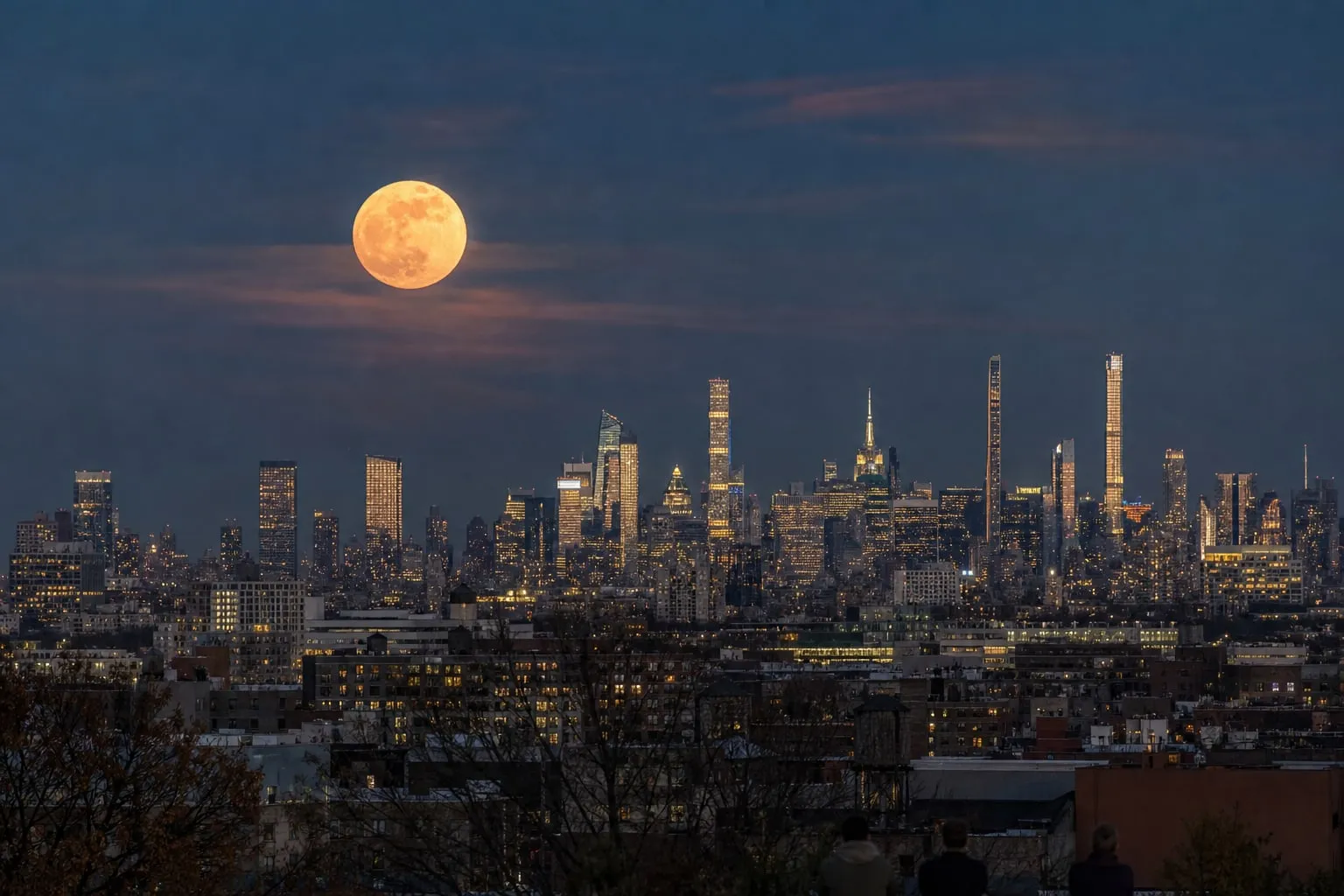
The November full moon is also near perigee: at the moment of full moon the moon is about 360,750 kilometres from the Earth, about 24,000 kilometres closer than its average distance of about 384,400 kilometres. It is the first of a run of three close full moons; the December full moon on Christmas Eve is the closest of the period, at about 356,700 kilometres. By most definitions, November’s is a supermoon. To the eye the difference from an ordinary full moon is small, a few percent in size, but the tides around the coasts are noticeably higher for a few days around it.
The names of the November moon
Beaver Moon is the name used in North American almanacs, which drew on a mixture of Indigenous and colonial traditions. Other names for the same full moon include the Frost Moon, from the season of the first hard frosts, and in some sources the Mourning Moon. In the Southern Hemisphere, where November is spring, these names make less sense, and many people simply call it the November full moon. Whatever the name, the instant is the same everywhere: 14:53 UTC on 24 November 2026.
Photographing it
The best pictures of a full moon with a landscape are usually taken on the evening of moonrise, when the moon is low and the sky still holds some twilight. In London that means about 16:00 on 24 November, soon after the moon clears the eastern horizon and just as the sun sets in the southwest; the two are on opposite sides of the sky at the same moment. Exposing for the moon’s bright surface and the dim landscape together is easiest in that short window, before the sky turns fully dark and the contrast becomes too great for one frame. A tripod and a lens of 200 millimetres or longer make the moon large enough against the skyline to hold the picture.
Questions
Beaver Moon meaning: where does the name come from?
The Beaver Moon meaning is seasonal: in November beavers prepare for winter, and in colonial and Native American almanacs the month was also the time to set beaver traps before the water froze.
Full moon November 2026: what time exactly?
The full moon November 2026 moment is 14:53 UTC on 24 November: 09:53 in New York, 14:53 in London, 23:53 in Tokyo.
Full moon November 2026 date: 23, 24 or 25 November?
The full moon November 2026 date in UTC is 24 November. The night to look is 23–24 November in the Americas and 24–25 November in Europe, Asia and Australia.
Is the Beaver Moon a supermoon?
Yes, by most definitions. At full moon it is about 360,750 kilometres from the Earth, so the beaver moon supermoon is the first of a run of close full moons that ends with the Cold Moon on Christmas Eve.
The next one
December’s full moon, the Cold Moon, falls at 01:28 UTC on 24 December 2026, which makes it the night of 23 to 24 December for much of Europe and the Americas.
You can pin any place and see which night counts as the full moon night there with The Full Moon Night.