
Reykjavik in November: watching the light run out
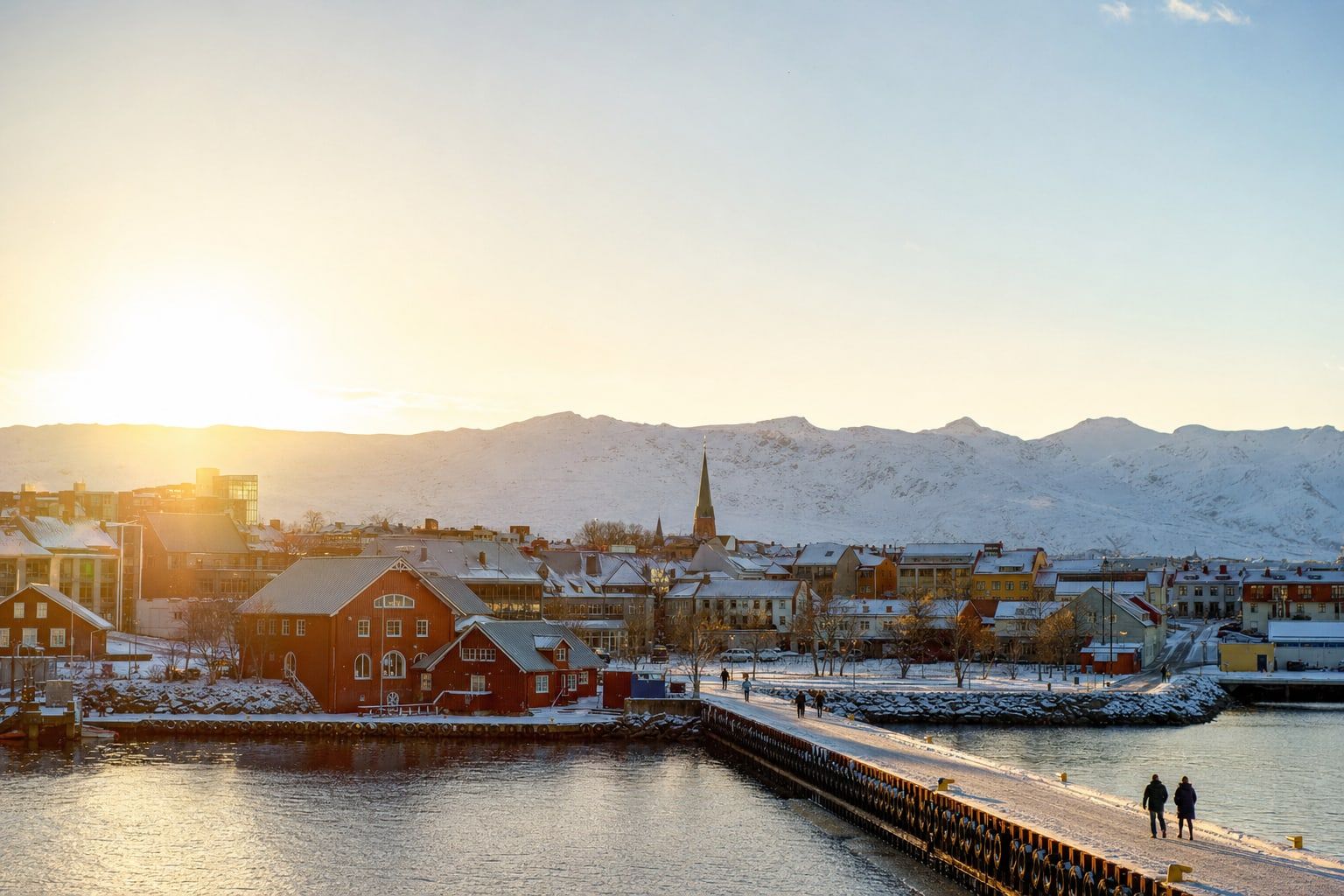
Reykjavik, at about 64.1° north, is the most northern capital of a sovereign state. It sits just below the Arctic Circle, so it never has a day without sunrise, but Reykjavik in November is when the days shrink faster than almost anywhere people visit on a city break.
The numbers
Calculated with the standard rule for the city centre, on Iceland’s year-round time (UTC+0, no daylight saving):
- 4 November 2026: sunrise about 09:20, sunset about 17:00, around 7 hours 40 minutes of daylight;
- 21 December 2026: sunrise about 11:22, sunset about 15:29, about 4 hours 7 minutes;
- 21 June 2027: the sun sets just after midnight and rises before 03:00, about 21 hours of daylight.
In November the day loses roughly five to six minutes every day. That is fast enough to notice from one weekend to the next.
Why Iceland’s mornings are so late
Part of the reason is latitude, and part is the clock. Iceland lies around 22° west, which would naturally put it about an hour and a half behind UTC by the sun. It uses UTC+0 all year. As a result, solar noon in Reykjavik comes around 13:30 on the clock, and winter sunrises are later still. There has been public debate in Iceland about moving the clock back an hour to better match daylight; so far it has not changed.
The light in between
Short days in Reykjavik are not dark days. Around the winter solstice the sun crawls low across the southern sky, never rising more than about 2.5° above the horizon. Sunrise colours run straight into sunset colours, and on clear days the whole short day is a long golden hour. Before and after, twilight lasts well over an hour.
Late autumn and winter are also the season for the northern lights. Reykjavik’s own light pollution dims them, but on active nights they are visible from the city’s edges, such as Grótta lighthouse on the western tip of the Seltjarnarnes peninsula.
What people do
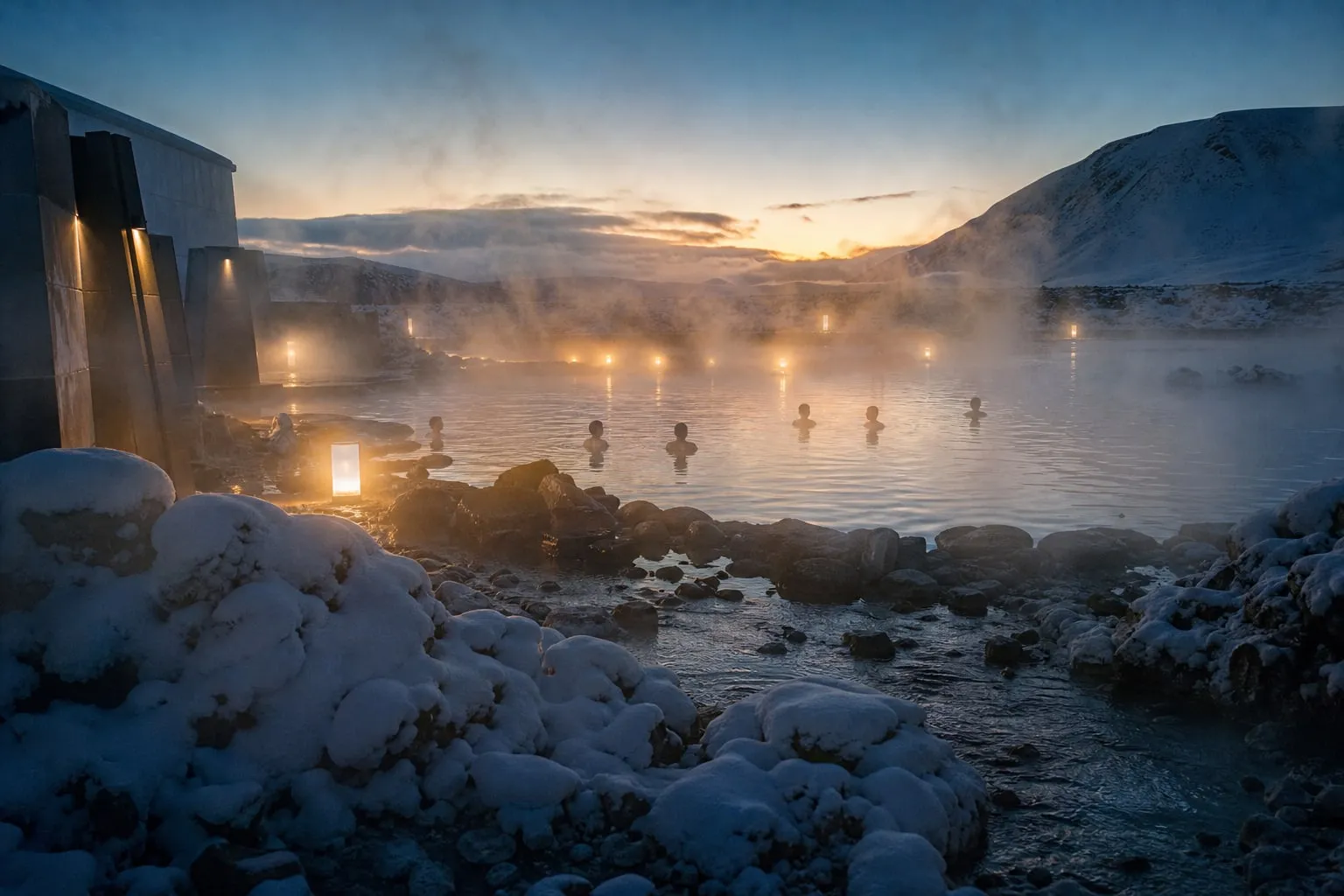
Icelanders lean into the season: candles in every window, swimming pools kept open late with hot tubs under the dark sky, and a dense calendar of concerts and festivals through the winter. Visitors often find that the low sun makes even a walk along the harbour feel like an event.
The calendar of the dark weeks
Calculated for central Reykjavík in the winter of 2026–27, on Iceland’s clock:
- The sun first rises after 10:00 on 17 November 2026, and after 11:00 on 7 December.
- The earliest sunset comes around 16 December, at about 15:28, a few days before the solstice.
- The latest sunrise comes around 23 December, at about 11:23, a few days after it.
- Sunrise moves back before 10:00 on 4 February 2027.
The earliest sunset and the latest sunrise do not fall on the shortest day. The solstice is the date of the shortest daylight, but the whole pattern of sunrise and sunset times is shifted by the equation of time, the small yearly drift between clock time and the sun. For anyone planning around the dark, the practical upshot is that afternoons start getting lighter about a week before Christmas, while mornings keep getting darker until the end of the year.
Twilight is the real daylight
What makes Reykjavík’s winter liveable is the length of twilight. On 21 December, civil twilight, when there is enough light to walk and read outdoors, begins about 79 minutes before sunrise and lasts as long again after sunset. Add those to the four hours of sunshine, and the city has more than six and a half hours of useful light even at the solstice. Because the sun rises in the southeast at an azimuth of about 152 degrees and sets in the southwest, the whole short day is lit from the south, and the slopes of Mount Esja across the bay catch a pink light for much of it.
Weather and the light
November is one of the wetter and windier months in Reykjavík, with average temperatures a little above freezing and frequent changes from rain to clear skies within a day. The clear spells are the ones to look for: the low sun makes long shadows at noon, and the snow on the surrounding mountains glows. For the northern lights, clear nights after the moon has set are best; the full moon of 24 November 2026 will brighten the sky for several nights around it, while the new moon of 9 December gives the darkest nights of the month.
The return of the light
From the end of December the days lengthen quickly. By the start of February Reykjavík gains more than five minutes of daylight every day, and by the March equinox about six and a half minutes a day, so the city goes from four hours of daylight to twelve in less than three months. Icelanders mark the turn in their own way: the midwinter festival of Þorrablót, from late January, with traditional food and long evenings, belongs to the darkest part of the year, and the arrival of spring is celebrated on the first day of summer, Sumardagurinn fyrsti, in late April.
Questions
Reykjavik sunset in November?
About 17:00 on 4 November, getting earlier by several minutes a day, down to the earliest sunset of the year, about 15:28 around 16 December.
Reykjavik in November weather?
Changeable: wind, rain and sleet, with temperatures around freezing. Clear spells bring the best light.
Reykjavik November northern lights?
The long nights make November a good month for them; cloud is the main obstacle. Visiting Reykjavik in November means planning around a short day and a long night.
A northern sunrise as a gift
For someone who has spent a winter in Iceland, or who keeps meaning to, a sunrise over Reykjavik, late in the morning and low over the bay, is distinctive. You can pin the harbour, Hallgrímskirkja or Grótta and see the exact time of The Sunrise or The Sunset before you dedicate it.