
Sunrise at Machu Picchu: when the sun clears the mountains
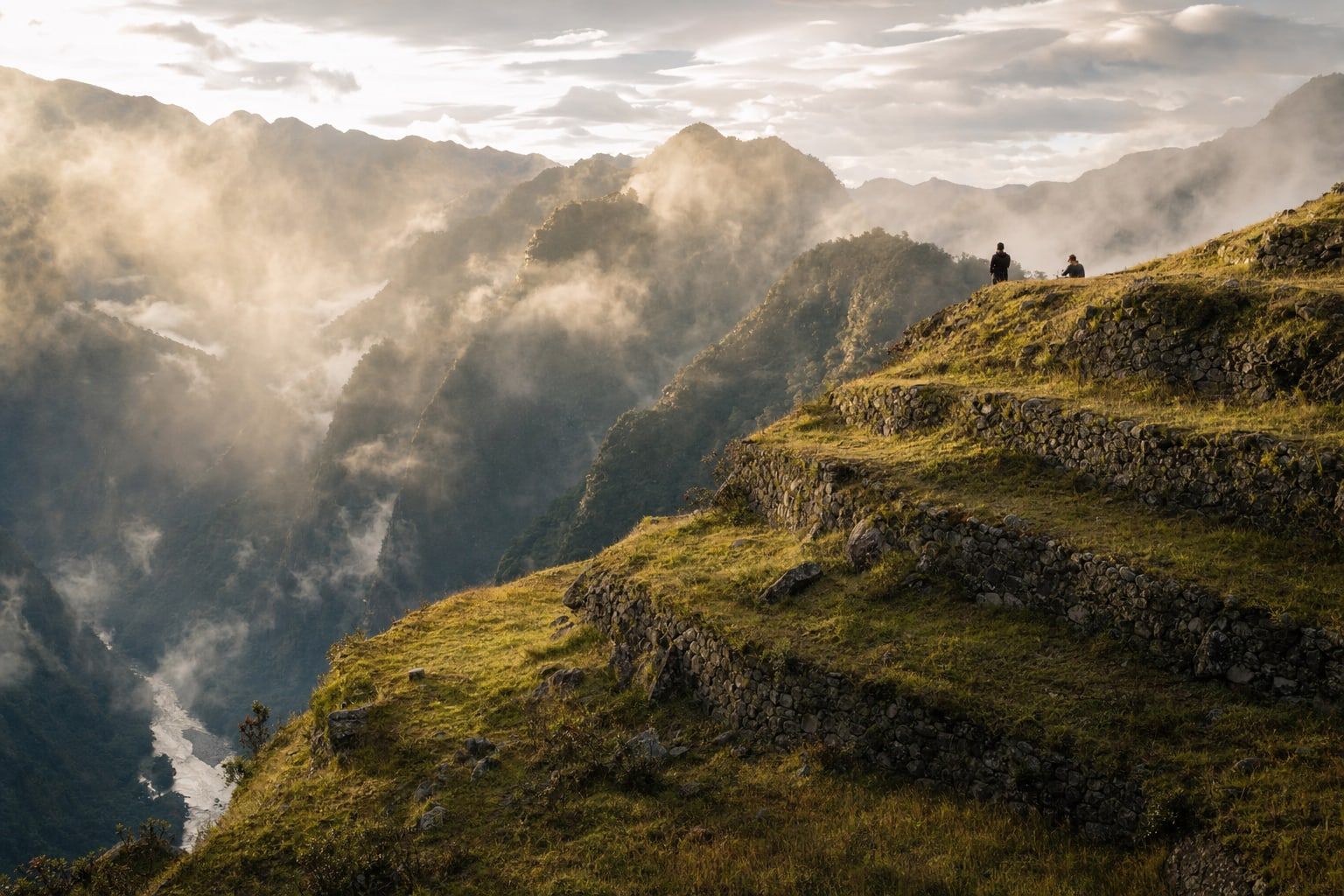
Machu Picchu, the fifteenth-century Inca citadel above the Urubamba valley in Peru, sits on a ridge at about 2,430 metres, surrounded by higher peaks. Sunrise at Machu Picchu is one of the most requested experiences in South America, and one of the most misunderstood, because the sunrise on a timetable and the sunrise you see over the ruins are different moments.
Two sunrises
Calculated with the standard rule, on an ideal flat horizon, sunrise at Machu Picchu on 7 November 2026 is at about 05:14 Peru time (UTC−5, no daylight saving). In late June, near the southern winter solstice, it is about 06:11.
The citadel, though, is ringed by mountains. To the east, the ridges of the Vilcabamba range rise well above the site, so the direct sun only clears them some time after the astronomical sunrise, often between half an hour and an hour later depending on the season and where exactly you stand. Before that the ruins sit in soft, shadowless light, which many people find the most beautiful part of the morning.
The Sun Gate
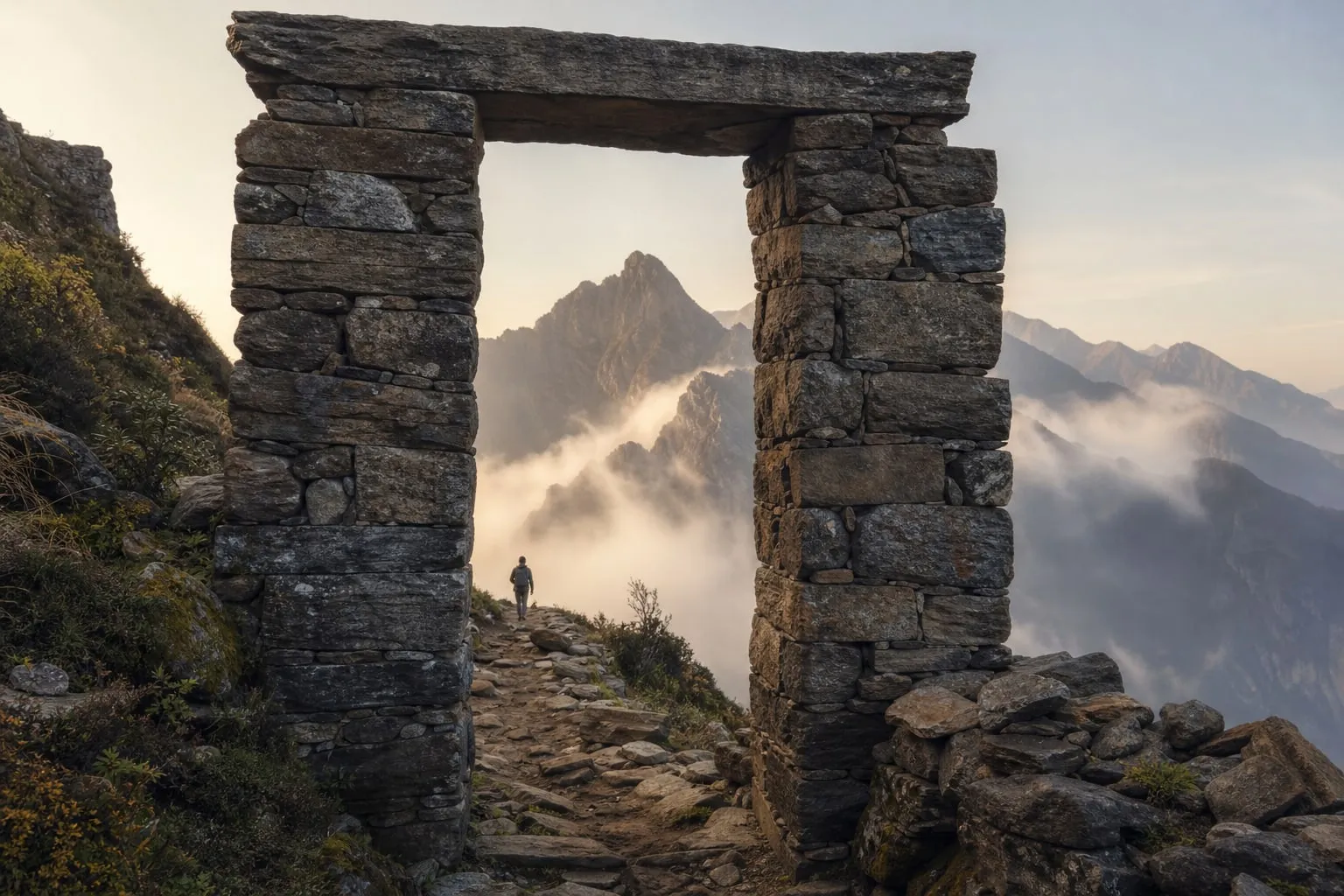
Inti Punku, the Sun Gate, is a stone gateway on the ridge above the citadel, at the end of the classic Inca Trail. Hikers on the four-day trek traditionally arrive there at dawn on the last day, and see Machu Picchu below them for the first time as the light reaches it. It can also be reached on foot from the citadel itself, about an hour’s walk uphill, with the appropriate ticket circuit.
Tickets and timing
Entry to Machu Picchu is by timed ticket for a specific circuit, with daily limits. The earliest entry slots are around 06:00, and the first buses up from Aguas Calientes leave before dawn, with queues to match. Arrangements change; buy tickets well in advance from the official sales channel and check the current circuits.
Clouds and the season
The dry season, roughly May to September, has the clearest mornings. In the wet season, November to March, mist often fills the valley at dawn and burns off through the morning, revealing the ruins piece by piece. That is less predictable, and sometimes more dramatic.
The year at the citadel
Calculated for the citadel on Peru time, with the standard rule on a flat horizon:
| Date | Sunrise | Direction | Sunset | Day length |
|---|---|---|---|---|
| 7 Nov 2026 | 05:15 | 107°, ESE | 17:52 | 12 h 38 min |
| 21 Dec 2026 | 05:21 | 114°, ESE | 18:14 | 12 h 53 min |
| 20 Mar 2027 | 05:54 | 90°, due east | 18:00 | 12 h 06 min |
| 21 Jun 2027 | 06:12 | 66°, ENE | 17:31 | 11 h 20 min |
At about 13 degrees south of the equator, the day length changes by only about an hour and a half over the year. The direction of sunrise changes more: in June the sun comes up to the northeast, in December to the southeast. Because of the mountains, what matters on the ground is when the sun climbs high enough to clear them. The sun reaches 10 degrees above the horizon at about 06:00 on 7 November and at about 07:00 on 21 June; it reaches 15 degrees at about 06:21 and 07:24 on the same dates. Depending on where you stand, the first direct light on the terraces typically falls somewhere in those windows.
The June solstice at Machu Picchu
The Inca organised much of their ritual year around the sun. At Machu Picchu, the curved tower known as the Torreón, or Temple of the Sun, has a window that archaeologists widely interpret as aligned with the sunrise at the June solstice, the shortest day of the southern year, when the sun rises furthest to the north. Light entering through it falls along a carved rock inside. In Cusco, the June solstice is still celebrated with Inti Raymi, the festival of the sun, held each year on 24 June, a revival of the Inca ceremony that draws large crowds to the city.
For the park itself the solstice is an ordinary day: the same timed tickets apply, and June, the heart of the dry season, is one of the busiest months. A clear dawn is more likely then than at any other time of the year.
Altitude and the body
At about 2,430 metres the citadel is lower than Cusco, which stands at about 3,400 metres, so travellers who have already spent a few days in Cusco usually find Machu Picchu easy. Those who arrive directly from the coast can still feel the altitude on the steep stairs of the site and on the climbs to the Sun Gate or Huayna Picchu, and early starts on little sleep make it worse. Water, a slow pace on the steps and a light layer for the cool morning, often around 10 °C before sunrise in the dry season, are the practical preparations.
Questions
Sunrise at Machu Picchu: what time?
The sunrise at Machu Picchu time on a flat horizon is between about 05:15 (November) and 06:12 (late June), Peru time. The direct sun clears the eastern ridges half an hour to an hour later.
Is sunrise at Machu Picchu worth it?
Yes, if you expect soft light and mist rather than a sun on the horizon. In the rainy season, often the clouds clear only later in the morning, so a dry-season visit, May to September, gives the best odds.
Sunrise Machu Picchu December?
For sunrise Machu Picchu December, the calculated time is about 05:21 on 21 December, in the rainy season, with frequent clouds.
Sunrise Machu Picchu tomorrow?
Our Machu Picchu place page shows the sunrise Machu Picchu tomorrow, and today, in local time.
A sunrise at Machu Picchu as a gift
For someone who walked the Inca Trail, or plans to, a sunrise over the citadel or the Sun Gate is a natural moment to mark. The calculated time is the astronomical one, the same rule as anywhere; the certificate records the place and the moment. You can pin Machu Picchu or Inti Punku and see the time of The Sunrise before you pay.