
Golden hour and blue hour: when they really happen
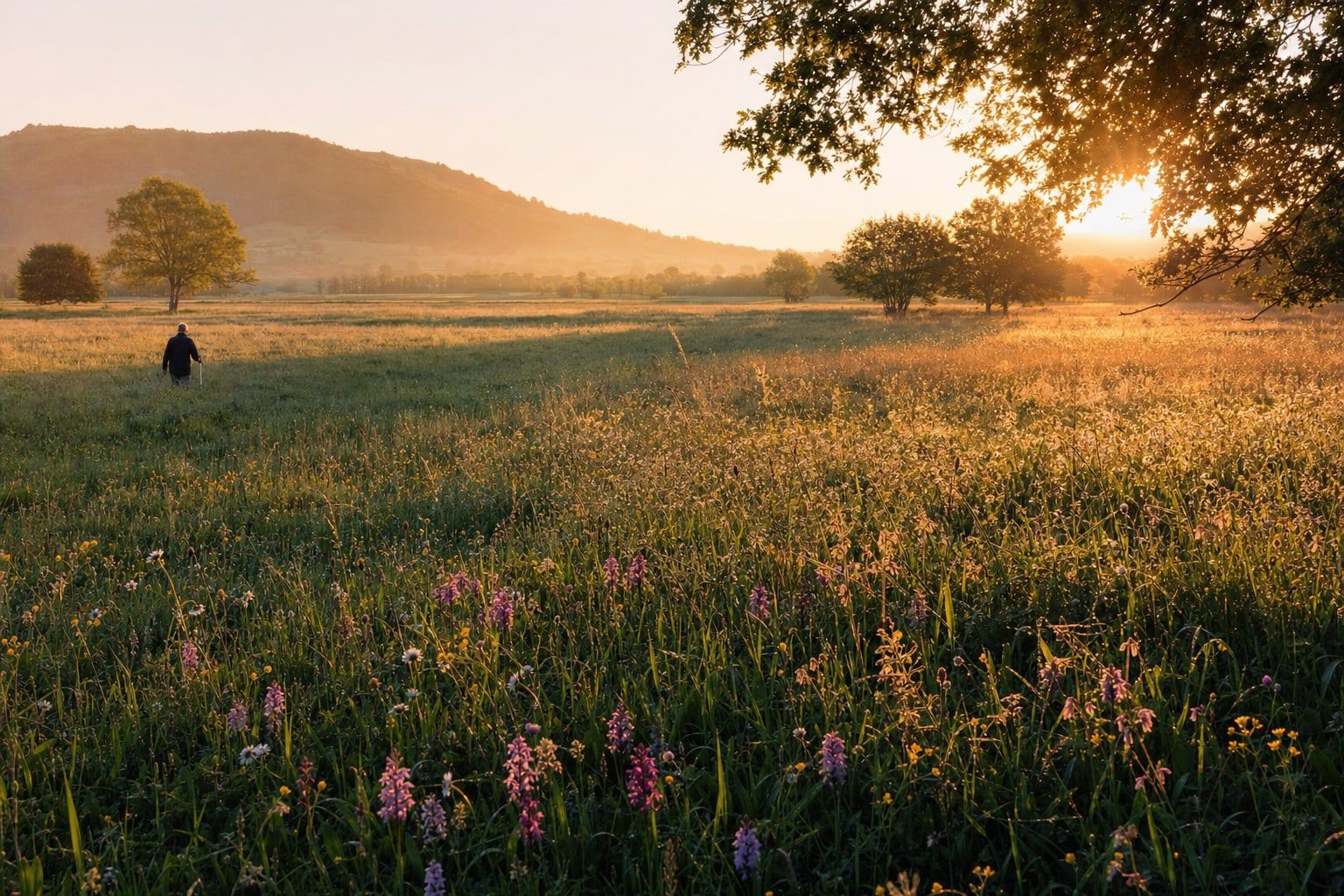
Photographers plan around two windows of light: the golden hour near sunrise and sunset, and the blue hour just before sunrise and after sunset. Both names suggest sixty minutes. Neither is fixed, and both depend on where you are and when.
Defined by the sun’s angle
The most useful way to define them is by the sun’s altitude:
- Golden hour: the sun is between roughly 6° above and just below the horizon. Light travels a long path through the atmosphere, blue is scattered away, and what reaches the ground is warm and low. Shadows are long and soft.
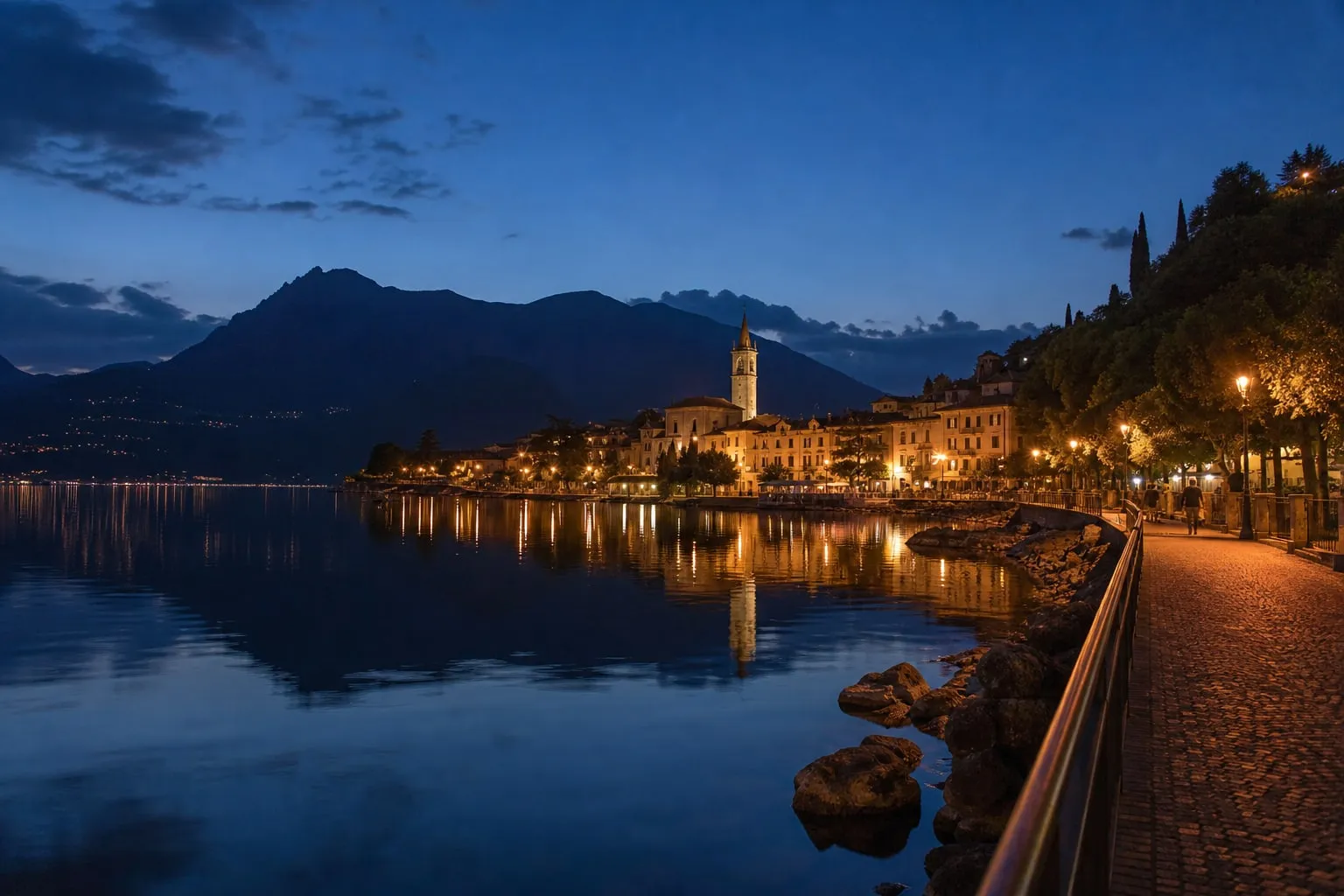
- Blue hour: the sun is between roughly 4° and 8° below the horizon. No direct sunlight reaches the ground; the sky itself is the light source, and it is a deep, even blue.
These are photographers’ conventions rather than astronomical standards, and some guides use slightly different angles. The principle is the same: the timing follows the sun’s height, not the clock.
How long they last
How long the sun takes to move through those few degrees depends on how steeply its path meets the horizon.
- Near the equator the sun rises and sets almost vertically. It climbs 6° in under half an hour, so the golden hour is short, and the blue hour lasts only about 15 minutes. In Quito, where the sun sets at about 18:03 in mid-October, the sky moves from gold to dark quickly.
- At mid-latitudes the path is slanted. In Paris in autumn, the golden hour after sunrise lasts roughly 40 to 50 minutes, and the blue hour 20 to 30.
- In the far north the path can be almost horizontal. In Tromsø in late November, the sun spends its entire short day below 6°, so the whole day is a long golden hour, and the blue hours before and after stretch for hours.
The season matters too
Around the solstices the sun moves more obliquely at mid-latitudes, so the windows are longer in midsummer and midwinter than in spring and autumn. Around the equinoxes, at any latitude, sunrise and sunset are at their quickest.
Measured examples
Calculated for the morning, from sunrise until the sun is 6° high (golden hour), and for the blue hour from 8° to 4° below the horizon before sunrise:
| Place and date | Golden hour | Blue hour |
|---|---|---|
| Quito, 15 October 2026 | 28 min | 16 min |
| Paris, 15 October 2026 | 43 min | 24 min |
| Paris, 21 December 2026 | 55 min | 28 min |
| Paris, 21 June 2027 | 50 min | 36 min |
| Tromsø, 15 October 2026 | 96 min | 47 min |
The equator really is quick: barely half an hour of golden light. In the far north in autumn, the same 6° take more than an hour and a half. The evening windows mirror the morning ones on the same day.
Why the light is warm and soft
Two things change at low sun angles. The light travels through far more atmosphere, which scatters away blue and leaves warm tones, and it arrives from the side rather than from above, so shadows are long and textures stand out. Haze, which looks flat at noon, glows when lit from behind at a low angle. That is why portraits, landscapes and architecture all look different in the first and last hours of the day, and why golden hour is worth planning for rather than hoping for.
Planning a shoot
- Start with the calculated sunrise or sunset for the exact point, not the nearest city.
- Add the window: a golden hour of 30 to 90 minutes depending on latitude and season, and a blue hour on the dark side of sunrise or sunset.
- Check the skyline: hills to the east or west shorten the usable light.
- Arrive early: the blue hour before sunrise starts in near darkness, and it is easy to miss while setting up.
On a phone
Phone cameras handle golden hour well, since the light is soft and the contrast low. The blue hour is harder: there is little light, so hold the phone steady against a railing or use a small tripod, and let night mode take a longer exposure. Turn off the flash; it lights only the foreground and spoils the sky.
Both windows are also shorter on hazy or dusty days, when the sun fades before it reaches the horizon and the warm light weakens early.
Using the calculated times
Sunrise and sunset times are the anchor for planning. Golden hour in the morning begins at sunrise; in the evening it ends at sunset. The blue hour sits on the other side: mostly before sunrise and after sunset, within civil and early nautical twilight. With an exact sunrise or sunset time for your spot, you can place both windows around it.
Weather and terrain
Clouds can make golden hour spectacular or erase it. Mountains to the east delay the first direct light; an open sea horizon gives the longest window. None of this changes the calculated moment of sunrise or sunset, only what you see.
Every Resthe sunrise and sunset is calculated for the exact point on the map. You can check the time for your place with The Sunrise or The Sunset.